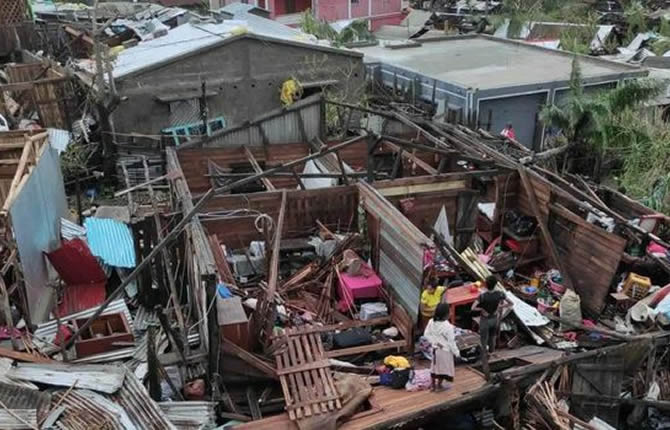
L'île Rouge est à genoux. Le passage apocalyptique du cyclone Gezani a transformé des villes entières en champs de ruines. Le président de la transition, Michaël Randrianirina, a lancé un appel à l'aide internationale ce week-end, décrivant une situation "catastrophique". Le bilan humain, encore provisoire, est déjà effroyable : au moins 40 morts et plus de 260 000 blessés, selon les derniers chiffres du Bureau national de gestion des risques et des catastrophes (BNGRC). Le gouvernement a décrété "l'état de sinistre national" pour tenter de faire face à l'ampleur de la tragédie.
L'épicentre de la dévastation se nomme Toamasina. Deuxième ville du pays et principal poumon économique avec son port, elle est aujourd'hui méconnaissable. Avec des vents soufflant en rafales jusqu'à 250 km/h à son passage, Gezani a littéralement rasé plus de 80% de ses infrastructures. Habitations pulvérisées, écoles éventrées, routes coupées : le tableau est celui d'une ville martyre. Sur toute la côte est, ce sont plus de 250 000 personnes qui sont sinistrées, dont près de 9 000 ont tout perdu et ont dû fuir leur domicile. Les districts d'Alaotra-Mangoro, Analanjirofo et Atsinanana sont désormais placés sous administration temporaire pour tenter de coordonner des secours dépassés par l'ampleur du désastre. L'armée a été déployée pour prêter main-forte et sécuriser les zones les plus dangereuses.
Mais la tragédie est loin d'être terminée. Après avoir déversé sa furie sur Madagascar, le cyclone, rétrogradé en dépression tropicale mais toujours extrêmement dangereux, file à travers le canal du Mozambique. Sa cible est désormais le continent.
Au Mozambique, l'heure est à la peur et à la préparation. L'Institut national de météorologie (INAM) a lancé une alerte rouge. Gezani, porté par des vents atteignant les 150 km/h et se déplaçant à une vitesse fulgurante de 100 km/h, devrait s'abattre sur les côtes ce jeudi 13 février. Les météorologues redoutent une intensification du phénomène, avec des rafales pouvant atteindre les 240 km/h. Les provinces d'Inhambane, de Sofala et de Gaza sont en première ligne. L'INAM prévoit des précipitations diluviennes, avec plus de 200 mm d'eau en seulement 24 heures, ce qui promet des inondations catastrophiques. La population, encore marquée par le passage meurtrier du cyclone Idai en 2019, retient son souffle et tente de se préparer au pire.
Natural Disasters in Africa: Madagascar Devastated, Mozambique on High Alert as Deadly Cyclone Gezani Barrels Towards Its Coast
As Southern Africa holds its breath, a new large-scale humanitarian drama is unfolding. After battering Madagascar, Tropical Cyclone Gezani, a true meteorological monster, is now hurtling towards the Mozambican coast, promising further destruction and desolation.
The "Red Island" is on its knees. The apocalyptic passage of Cyclone Gezani has turned entire cities into rubble. Transitional President Michaël Randrianiriana issued an international plea for help this weekend, describing a "catastrophic" situation. The human toll, still provisional, is already appalling: at least 40 dead and over 260,000 injured, according to the latest figures from the National Office for Risk and Disaster Management (BNGRC). The government has declared a "national disaster" in an attempt to cope with the scale of the tragedy.
The epicenter of the devastation is Toamasina. The country's second-largest city and main economic hub with its port, it is now unrecognizable. With winds gusting up to 250 km/h at its peak, Gezani literally flattened more than 80% of its infrastructure. Homes pulverized, schools gutted, roads cut: the picture is that of a martyred city. Along the entire east coast, over 250,000 people are affected, nearly 9,000 of whom have lost everything and have been forced to flee their homes. The districts of Alaotra-Mangoro, Analanjirofo, and Atsinanana are now under temporary administration to try to coordinate relief efforts overwhelmed by the scale of the disaster. The army has been deployed to assist and secure the most dangerous areas.
But the tragedy is far from over. After unleashing its fury on Madagascar, the cyclone, downgraded to a tropical depression but still extremely dangerous, is speeding across the Mozambique Channel. Its target is now the continent.
In Mozambique, it is a time of fear and preparation. The National Meteorology Institute (INAM) has issued a red alert. Gezani, driven by winds reaching 150 km/h and moving at the lightning speed of 100 km/h, is expected to make landfall this Thursday, February 13th. Meteorologists fear an intensification of the phenomenon, with gusts possibly reaching 240 km/h. The provinces of Inhambane, Sofala, and Gaza are on the front line. INAM predicts torrential rainfall, with more than 200 mm of water in just 24 hours, promising catastrophic flooding. The population, still scarred by the deadly passage of Cyclone Idai in 2019, is holding its breath and trying to prepare for the worst.
Catastrophes naturelles, Cyclone Gezani, Madagascar, Mozambique, Toamasina, inondations, alerte cyclonique, actualités Afrique, bilan humain, dévastation, état d'urgence, aide internationale, phénomène météorologique, canal du Mozambique, provinces de Sofala, Inhambane, Gaza, vents violents, 2024
Silognhia Edwige (Stagiaire)