Un cambriolage record au cœur du Louvre
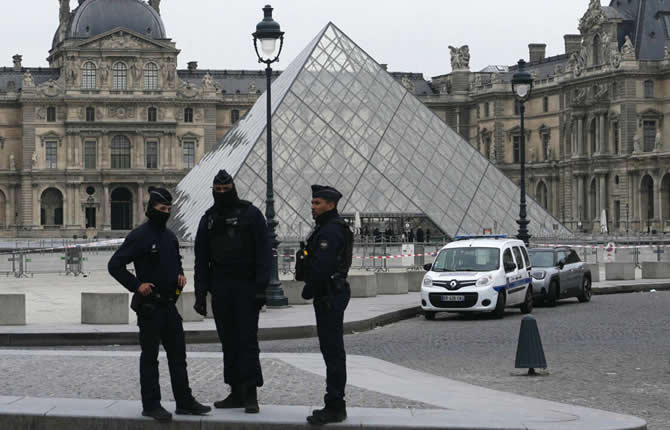
C’est un casse digne d’un film hollywoodien. Les auteurs du cambriolage survenu au musée du Louvre ont mis la main sur un butin estimé à 88 millions d’euros, selon les révélations de BFMTV. En seulement quatre minutes, les malfaiteurs ont emporté huit bijoux contenant plus de 8.000 diamants, 212 perles, 35 émeraudes et 34 saphirs.
L’enquête révèle une opération méticuleusement préparée : utilisation d’une nacelle, de deux scooters partis à des moments différents depuis Aubervilliers, et possiblement d’un utilitaire blanc stationné dans le sud de Paris pour le transfert du butin. Fait troublant, la direction du musée avait été alertée dès 2007 sur la vulnérabilité de cette galerie précise, sans que des mesures de sécurité adéquates ne soient mises en œuvre.
Macron confirme le futur porte-avions nucléaire français
Sur le front stratégique, le président Emmanuel Macron a confirmé, lors d’une visite aux Émirats arabes unis, la construction d’un nouveau porte-avions à propulsion nucléaire, destiné à remplacer le Charles-de-Gaulle à l’horizon 2038. Une décision prise, selon l’Élysée, conformément aux lois de programmation militaire et après un examen approfondi.
Ce futur géant des mers affichera 80.000 tonnes pour 310 mètres de long, embarquera 30 avions de combat et mobilisera 2.000 marins, avec près de 800 fournisseurs industriels impliqués. Toutefois, le projet suscite des interrogations dans un contexte d’impasse budgétaire, faisant craindre un possible trou capacitaire pour la marine nationale si des retards venaient à s’accumuler.
Vols organisés : les producteurs ciblés avant Noël
À l’approche des fêtes de fin d’année, la criminalité se déplace aussi vers les zones rurales. Les héliciculteurs et éleveurs figurent parmi les principales cibles de vols organisés. Dans la Marne, à Gueux, un vol estimé à 90.000 euros a été enregistré. Dans la Vienne, 250 kilos de foies gras et magrets de canard ont été dérobés en une seule nuit.
Face à cette recrudescence, la gendarmerie annonce un déploiement massif, appuyé par des réservistes, et propose des audits de sécurité gratuits aux producteurs, une stratégie qui aurait déjà permis une baisse significative des vols.
Drame à Ajaccio : un homme abattu par la police
En Corse, un drame s’est produit à Ajaccio, près de la place Abbatucci. Un homme d’une trentaine d’années, sans domicile fixe, armé d’un couteau et jugé menaçant pour les passants, a été abattu par la police après avoir blessé un agent lors de sa fuite.
Selon les premiers éléments rapportés par Corse Matin et l’AFP, l’individu avait déjà adopté un comportement agressif plus tôt dans la journée. Son identité et ses motivations restent à ce stade inconnues.
Cyberattaque majeure contre La Poste et La Banque Postale
Enfin, le numérique n’est pas en reste. Une attaque informatique a paralysé les services en ligne de La Poste et de La Banque Postale, rendant indisponibles l’accès aux comptes bancaires et le suivi des colis, en pleine période de forte activité liée à Noël.
Le journal Le Monde souligne que cet incident survient alors que La Poste traite près de 180 millions de colis sur les deux derniers mois de l’année. Cette attaque s’inscrit dans une série noire, après celles ayant touché récemment plusieurs ministères français, avec des exfiltrations massives de données personnelles.
France on Edge: Historic Louvre Heist, Cyberattacks, Violence and Security Challenges Ahead of the Holidays
France is facing a particularly tense security climate, as a series of major incidents—ranging from an unprecedented museum robbery to cyberattacks, violent police intervention and strategic military decisions—underscore the country’s growing vulnerabilities on the eve of the year-end holidays.
Record-Breaking Heist at the Louvre
In what investigators describe as one of the most spectacular art-related robberies in modern French history, thieves made off with jewels worth an estimated €88 million from the Louvre Museum, according to BFMTV.
Although only eight pieces of jewelry were stolen, they contained an extraordinary volume of precious stones: more than 8,000 diamonds, 212 pearls, 35 emeralds and 34 sapphires. The entire operation reportedly lasted just four minutes.
Investigators say the criminals used a hydraulic lift, as well as two scooters that departed at different times from Aubervilliers, north of Paris, to reach the museum. Authorities are also examining the possible involvement of a white utility vehicle spotted in southern Paris at the time of the robbery, believed to have been used to transfer the stolen jewels. The vehicle has not yet been located.
Notably, museum management had been warned as early as 2007 about the vulnerability of the gallery targeted during the heist, yet adequate security measures were never fully implemented.
Macron Confirms New Nuclear-Powered Aircraft Carrier
On the strategic front, French President Emmanuel Macron, speaking during a visit to the United Arab Emirates, reaffirmed France’s decision to build a new nuclear-powered aircraft carrier to replace the aging Charles de Gaulle.
The decision, Macron said, was taken this week in line with France’s military programming laws and following a “complete and thorough review.” The president also announced he would personally visit the Chantiers de l’Atlantique shipyards in Saint-Nazaire in February.
Described by Macron as a symbol of national power and industrial excellence, the future aircraft carrier will involve around 800 suppliers. Expected to enter service in 2038, the vessel will displace nearly 80,000 tons, measure 310 meters in length, carry 30 combat aircraft, and operate with a crew of 2,000 sailors—making it significantly larger than the current Charles de Gaulle.
However, the project faces uncertainty amid France’s budgetary constraints, raising concerns within the navy about a potential capability gap if construction is delayed. Studies are underway to assess whether the Charles de Gaulle can remain operational beyond 2038.
Organized Thefts Target Food Producers Ahead of Christmas
As the holiday season approaches, French gendarmes are stepping up efforts to protect farmers and specialty food producers, increasingly targeted by organized theft networks.
In Gueux, in the Marne region, snail farmers were hit by a robbery estimated at €90,000. Meanwhile, in the Vienne department, thieves stole 250 kilograms of foie gras and duck magret from a producer during the night of December 11–12, products highly sought after during Christmas celebrations.
To counter this trend, the gendarmerie has deployed reinforced patrols, including reservists, and is offering free security audits to producers throughout the year—a strategy authorities say has already led to a decline in thefts and higher case-resolution rates.
Fatal Police Shooting in Ajaccio
In Corsica, a man in his thirties was shot dead by police in Ajaccio after threatening passersby with a knife near Place Abbatucci, local newspaper Corse Matin reported.
Witnesses described the suspect as highly mobile and aggressive. During the intervention, he reportedly pushed and knocked down a police officer while attempting to flee. Police then opened fire, and the man later died from his injuries, according to the French news agency AFP.
The individual, believed to be homeless, had already displayed violent behavior earlier in the day at a local business. His identity and motives remain unknown.
Cyberattack Disrupts La Poste and La Banque Postale
France’s digital infrastructure also came under strain on Monday as a cyberattack disrupted online services at La Poste and its banking subsidiary La Banque Postale.
Customers were unable to access bank accounts, and parcel-tracking services were severely affected. The incident occurred at a critical time, as La Poste handles nearly 180 million parcels during the final two months of the year.
The attack follows recent cyber intrusions targeting several French government ministries, including the Interior Ministry, resulting in the exfiltration of personal data belonging to millions of citizens.
France, Louvre cambriolage, vol diamants Louvre, sécurité France, Emmanuel Macron porte-avions nucléaire, Charles-de-Gaulle remplacement, cyberattaque La Poste, La Banque Postale, vols producteurs fêtes, gendarmerie française, Ajaccio police, Corse faits divers, actualité France Cameroun
Ekanga Ekanga Fernand