
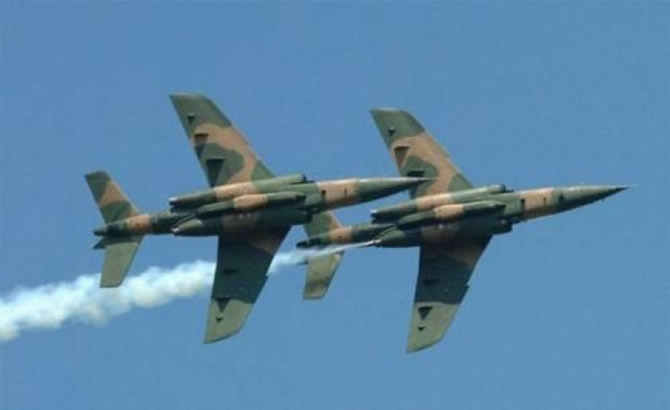
Les versions s'opposent avec une netteté qui illustre les tensions persistantes dans la région. Le porte-parole de l'armée de l'air nigériane, le Commandant Ehimen Ejodame, a catégoriquement démenti toute arrestation ou violation. "Après le décollage de Lagos pour le Portugal, l'équipage a rencontré des problèmes techniques", a-t-il expliqué, soulignant que l'atterrissage à l'aéroport le plus proche était une mesure de sécurité de routine. L'équipage de onze militaires serait "en sécurité" et aurait reçu "un accueil chaleureux" des autorités locales.
Une narration loin d'être partagée par la Confédération du Sahel (Burkina Faso, Mali, Niger). Dans un communiqué cinglant, l'alliance affirme que l'appareil, évoluant sans autorisation dans l'espace aérien burkinabè, a été "contraint de se poser". Les autorités burkinabè, après enquête, ont établi l'absence de clairance de survol. La CES condamne "avec la plus grande fermeté" ce qu'elle qualifie d'"acte inamical mené au mépris du droit international".
La suite des déclarations a fait l'effet d'un coup de tonnerre. Les chefs d'État de la Confédération ont mis leurs "défenses aériennes et antiaériennes en alerte maximale" et les ont "autorisées à neutraliser tout aéronef qui violerait l'espace confédéral". Un avertissement sans précédent qui marque un durcissement radical de la posture sécuritaire de l'alliance, née en 2023 sous le nom d'Alliance des États du Sahel (AES) avant de se muer en Confédération en juillet 2024.
Cet incident, survenant dans un contexte de fragilité régionale et de redéfinition des alliances sécuritaires, dépasse le simple fait technique. Il expose au grand jour la défiance entre le géant nigérian, traditionnel pivot de la CEDEAO, et les régimes de la CES, qui prônent une souveraineté africaine farouchement éloignée des anciennes puissances occidentales. Alors que les préparatifs pour la suite du vol du C-130 sont en cours, les préparatifs diplomatiques, eux, s'annoncent autrement plus complexes. La sécurité du ciel sahélien vient de franchir un nouveau seuil de tension.
incident aérien Nigeria Burkina Faso, avion militaire C-130 atterrissage Bobo-Dioulasso, Confédération des États du Sahel CES, violation espace aérien, Alliance des États du Sahel AES, défense aérienne Sahel, tensions diplomatiques Afrique de l'Ouest, neutralisation aéronef, souveraineté aérienne, crise Burkina Faso Nigeria
Nigeria-Burkina Faso Air Incident: Emergency Landing or Deliberate Violation? Sahel Confederation Raises the Stakes.
An air incident with the makings of a diplomatic crisis is rattling the West African region. A Nigerian Air Force C-130 military transport plane made an emergency landing on Monday, December 8, 2025, in Bobo-Dioulasso, Burkina Faso. While Abuja cites a technical failure and standard procedures, Ouagadougou and its allies in the Confederation of Sahel States (CES) denounce an "unfriendly" violation of its sovereignty and issue a threat of neutralization.
The conflicting narratives highlight the persistent tensions in the region. The spokesperson for the Nigerian Air Force, Air Commodore Ehimen Ejodame, categorically denied any arrest or violation. "After takeoff from Lagos bound for Portugal, the crew encountered technical problems," he explained, emphasizing that landing at the nearest airport was a routine safety measure. The crew of eleven military personnel is said to be "safe" and received a "warm welcome" from local authorities.
A narrative far from shared by the Sahel Confederation (Burkina Faso, Mali, Niger). In a scathing statement, the alliance claims the aircraft, operating without authorization in Burkinabe airspace, was "forced to land." Burkinabe authorities, after investigation, confirmed the lack of overflight clearance. The CES condemns "in the strongest terms" what it calls an "unfriendly act carried out in defiance of international law."
The subsequent statements were a thunderclap. The Confederation's heads of state have placed their "air and anti-air defenses on maximum alert" and "authorized them to neutralize any aircraft that violates the confederal airspace." An unprecedented warning marking a radical hardening of the alliance's security posture, born in 2023 as the Alliance of Sahel States (AES) before transforming into a Confederation in July 2024.
This incident, occurring in a context of regional fragility and redefinition of security alliances, goes beyond a simple technical event. It lays bare the distrust between the Nigerian giant, a traditional pivot of ECOWAS, and the CES regimes, which advocate a fierce African sovereignty distanced from former Western powers. While preparations are underway to continue the C-130's flight, diplomatic preparations promise to be far more complex. The security of the Sahelian skies has just entered a new level of tension.
Nigeria Burkina Faso air incident, military plane C-130 landing Bobo-Dioulasso, Confederation of Sahel States CES, airspace violation, Alliance of Sahel States AES, Sahel air defense, West Africa diplomatic tensions, aircraft neutralization, air sovereignty, Burkina Faso Nigeria crisis
Moussa Nassourou
Le calendrier complet de la Can Féminine 2026
Suivez certains matchs en direct grâce à nos partenaires
Articles similaires
 Société
Nuit noire sur l’Iran ? Washington étudie une reprise des frappes le 9 novembre sous la nouvelle lune
Fox News révèle : les États-Unis envisagent de relancer les hostilités contre l’Iran dès le 9...
 Société
Insécurité industrielle : Metafrique Steel, l'usine qui défie l'État
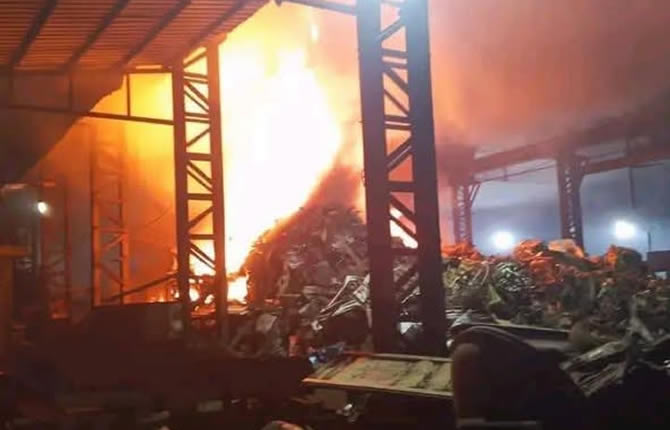
Cinq morts, trois blessés toujours sous oxygène. L'explosion de Metafrique Steel n'est pas un...
 Société
PlaYce Yaoundé booste son capital de 2,19 milliards pendant que le gouvernement lâche 5,5 milliards pour 20 000 jeunes du secteur informel
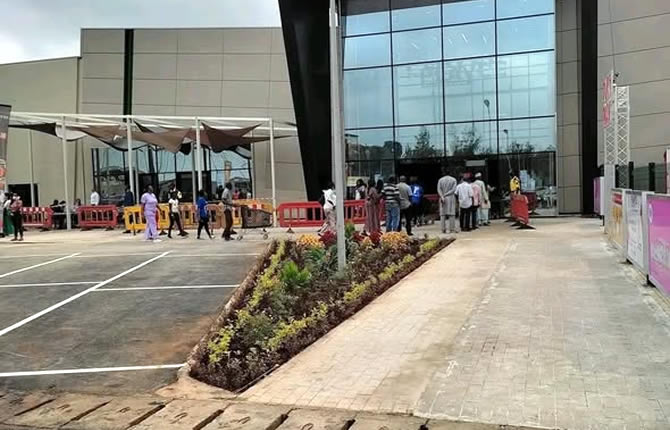
PlaYce Cameroun passe de 15 à 17,3 milliards de capital et CFAO vise Douala. En parallèle, Alamine...
 Société
Contournement de Yaoundé : Biya signe, mais les 129 milliards de FCFA ne sont pas encore dans les caisses
Décret du 5 novembre : 129,1 milliards de FCFA pour la rocade de Yaoundé (T3). Édéa-Douala : 174,6...
 Société
Marchés publics au Cameroun : 99 entreprises sanctionnées, les abandons de chantiers inquiètent
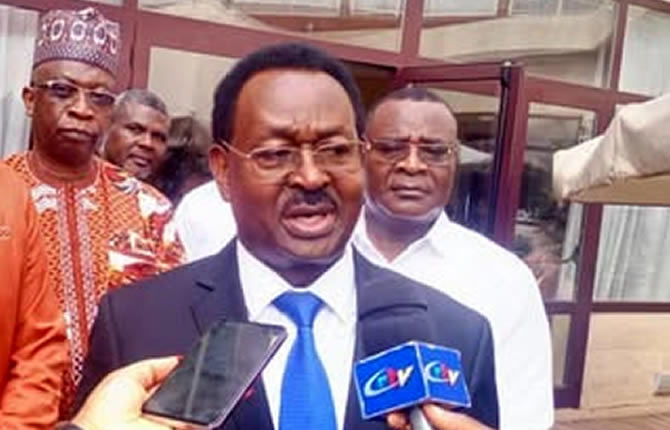
Marchés publics au Cameroun : 65 entreprises exclues pour fraude en 2025 et 99 marchés résiliés....
 Société
Fonds routier : Paul Biya nomme William Azebaze Jiofack DG – le rebond économique et le bras de fer du Port de Douala sous le feu des projecteurs
Paul Biya nomme William Azebaze Jiofack à la tête du Fonds routier le 5 novembre 2026. Croissance...