

Dans la foulée, les militaires ont annoncé une restriction temporaire de l’accès à plusieurs réseaux sociaux, notamment Facebook, TikTok et YouTube, selon le journal Democrato. Une décision justifiée par la volonté de limiter « la diffusion de contenus susceptibles d’attiser la violence ou de propager la désinformation ». Pour l’instant, WhatsApp continue de fonctionner.
Suspension des institutions et mise en place d’un Commandement militaire suprême
Dans une déclaration lue à la télévision nationale, le brigadier général Denis N’Canha a annoncé la création d’un Commandement militaire suprême, désormais organe de gouvernance du pays « jusqu’à nouvel ordre ». L’identité de son futur dirigeant n’a pas été précisée.
Les nouvelles autorités militaires ont immédiatement :
- Suspendu toutes les institutions civiles
- Fermé les frontières terrestres, maritimes et aériennes
- Décrété un couvre-feu nocturne
- Interrompu les activités des médias nationaux
- Suspendu le dépouillement des élections présidentielle et législatives du 23 novembre
Les résultats devaient être annoncés le 28 novembre par la Commission électorale nationale.
Arrestations en cascade au sommet de l’État
Le président Umaro Sissoco Embalo, candidat à sa propre succession, a été arrêté dans son bureau au palais présidentiel. Il a confirmé à plusieurs médias internationaux avoir été renversé par l’armée, précisant qu’aucune violence n’avait été exercée contre lui :
« J’ai bien été renversé. Je suis actuellement à l’état-major », a-t-il confié à France 24.
Parmi les autres personnes interpellées figurent :
- Le chef d’état-major, le général Biague Na Ntan
- Le vice-chef d’état-major, le général Mamadou Touré
- Le ministre de l’Intérieur, Botché Candé
- Le leader du principal parti d’opposition, Domingos Simões Pereira
- Le candidat du PAIGC, Fernando Dias da Costa
Leur lieu de détention reste inconnu à cette heure.
Des tirs près des centres de pouvoir
Selon l’AFP et Reuters, des tirs nourris ont été entendus à proximité du palais présidentiel ainsi que près de la Commission électorale nationale, située à moins d’un kilomètre. Des militaires, dont l’unité n’a pas été identifiée, ont bloqué les principaux axes routiers menant à ces zones sensibles.
Sur les réseaux sociaux — avant leur partielle suspension — plusieurs témoins évoquaient une situation « chaotique et confuse » dans la capitale Bissau.
Un pays coutumier des coups d’État
Depuis son indépendance en 1974, la Guinée-Bissau a connu quatre coups d’État réussis et de nombreuses tentatives avortées, faisant du pays l’un des plus instables politiquement en Afrique de l’Ouest.
Ironie du calendrier : quelques jours avant son arrestation, Umaro Sissoco Embalo, en déplacement au Tchad et au Mali, affirmait qu’une tentative de déstabilisation était en cours… tout en rassurant sur le contrôle de la situation.
L’ombre des narcotrafiquants plane sur la crise
Le général Denis N’Canha justifie le putsch par la découverte d’un complot impliquant des “barons nationaux de la drogue”, qui auraient introduit des armes dans le pays pour « bouleverser l’ordre constitutionnel ». Des accusations graves qui risquent de plonger davantage le pays dans une longue transition militarisée.
Guinea-Bissau: Army Seizes Power, Shuts Down Social Media and Pushes the Country Into Uncertainty
Guinea-Bissau has plunged into a new phase of political darkness. Amid extreme tension marked by gunfire, the arrest of senior officials and the suspension of the electoral process, the army officially seized power on November 26, bringing an abrupt end to President Umaro Sissoco Embalo’s mandate.
As part of their first measures, the military announced a temporary restriction of access to several social media platforms, including Facebook, TikTok and YouTube, according to the newspaper Democrato. The move is intended to limit the spread of content likely to incite violence or fuel disinformation. For now, WhatsApp remains operational.
Creation of a Supreme Military Command
In a televised address to the nation, Brigadier General Denis N’Canha announced the establishment of a Supreme Military Command, which now becomes the highest governing body of the country “until further notice.” The identity of the person who will lead it has not yet been disclosed.
The military authorities have already:
- Suspended all civilian institutions
- Closed land, sea and air borders
- Imposed a night curfew
- Halted the activities of local media
- Suspended the vote counting of the presidential and legislative elections held on November 23
The Electoral Commission was initially due to announce the results on November 28.
Wave of high-level arrests
President Umaro Sissoco Embalo, who was seeking a second term in office, was arrested in his office inside the presidential palace. Speaking briefly to international media, he confirmed that he had been overthrown by the military, insisting no violence had been used against him:
“I have indeed been overthrown. I cannot say much, otherwise they will confiscate my phone. I am currently at the military headquarters,” he told France 24.
Among those reportedly arrested are:
- Army Chief of Staff General Biague Na Ntan
- Deputy Chief of Staff General Mamadou Touré
- Minister of the Interior Botché Candé
- Main opposition leader Domingos Simões Pereira
- PAIGC presidential candidate Fernando Dias da Costa
Their current whereabouts remain unknown.
Gunfire in the heart of the capital
According to AFP and Reuters, gunfire was heard near the presidential palace and around the headquarters of the National Electoral Commission, located less than one kilometre away. Soldiers, whose specific units have not yet been identified, reportedly blocked the main roads leading to these sensitive areas.
Before some platforms went offline, social media users in Bissau described the situation as “chaotic and confusing.”
A history of repeated coups
Since gaining independence from Portugal in 1974, Guinea-Bissau has experienced four successful military coups and a dozen failed attempts, making it one of the most politically unstable countries in West Africa.
Ironically, just days before his arrest, President Embalo — who had recently travelled to Chad and Mali — warned that an attempt to destabilise the country was underway, while still claiming that the situation remained under control.
Drug trafficking accusations fuel further tensions
General Denis N’Canha justified the coup by claiming that “national drug barons” were involved in a plot to destabilise the country and had introduced weapons to “change the constitutional order.” These allegations further deepen fears of a long and uncertain military-led transition.
Guinée-Bissau, coup d’État, armée guinéenne, Umaro Sissoco Embalo, Denis N’Canha, putsch militaire, Afrique de l’Ouest, crise politique, élections suspendues, réseaux sociaux bloqués, couvre-feu, fermeture des frontières, instabilité politique, Jeune Afrique, AFP, Commandement militaire suprême, politique africaine
Moussa Nassourou
Le calendrier complet de la Can Féminine 2026
Suivez certains matchs en direct grâce à nos partenaires
Articles similaires
 Société
Nuit noire sur l’Iran ? Washington étudie une reprise des frappes le 9 novembre sous la nouvelle lune
Fox News révèle : les États-Unis envisagent de relancer les hostilités contre l’Iran dès le 9...
 Société
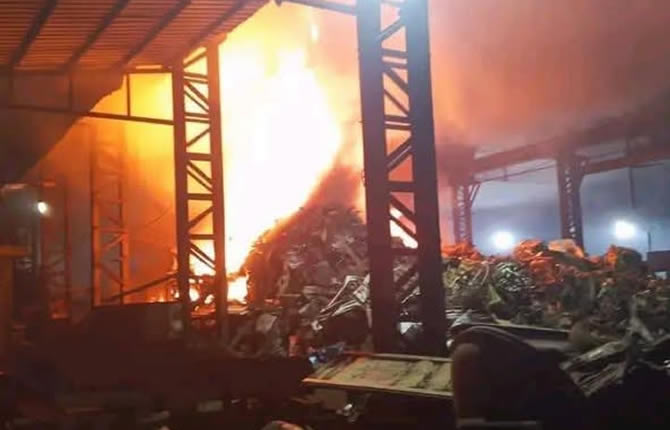
Insécurité industrielle : Metafrique Steel, l'usine qui défie l'État
Cinq morts, trois blessés toujours sous oxygène. L'explosion de Metafrique Steel n'est pas un...
 Société
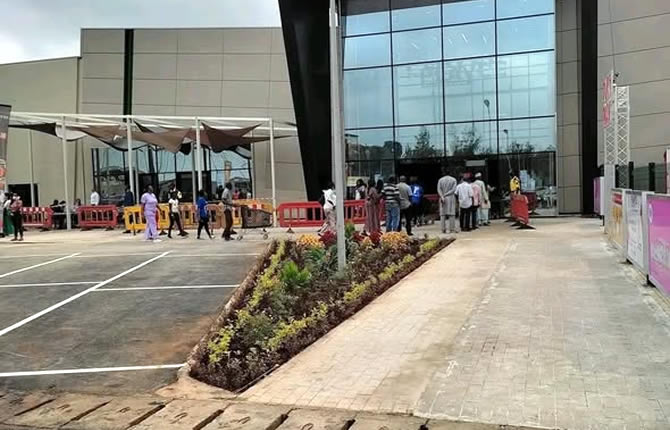
PlaYce Yaoundé booste son capital de 2,19 milliards pendant que le gouvernement lâche 5,5 milliards pour 20 000 jeunes du secteur informel
PlaYce Cameroun passe de 15 à 17,3 milliards de capital et CFAO vise Douala. En parallèle, Alamine...
 Société
Contournement de Yaoundé : Biya signe, mais les 129 milliards de FCFA ne sont pas encore dans les caisses
Décret du 5 novembre : 129,1 milliards de FCFA pour la rocade de Yaoundé (T3). Édéa-Douala : 174,6...
 Société
Marchés publics au Cameroun : 99 entreprises sanctionnées, les abandons de chantiers inquiètent
Marchés publics au Cameroun : 65 entreprises exclues pour fraude en 2025 et 99 marchés résiliés....
 Société
Fonds routier : Paul Biya nomme William Azebaze Jiofack DG – le rebond économique et le bras de fer du Port de Douala sous le feu des projecteurs
Paul Biya nomme William Azebaze Jiofack à la tête du Fonds routier le 5 novembre 2026. Croissance...