
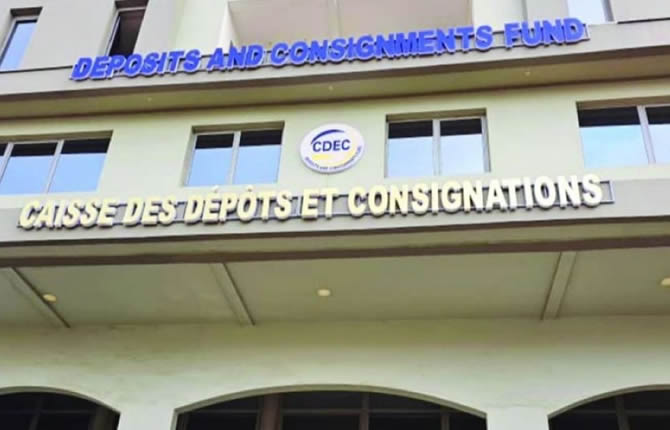
Cameroun : 5 milliards de FCFA pour financer les PME des femmes et des jeunes, voici les conditions pour en bénéficier
La Caisse des dépôts et consignations du Cameroun (CDEC) passe à l'offensive pour faciliter l'accès des femmes entrepreneures et des jeunes chefs d'entreprise au financement bancaire. Le 4 novembre 2026, l'institution a signé deux conventions avec AFG Bank Cameroun et General Bank of Cameroon (GBC), pour mobiliser une enveloppe initiale de 5 milliards de FCFA en faveur des petites et moyennes entreprises (PME). Avec des crédits pouvant atteindre 75 millions de FCFA par entreprise, des maturités allant jusqu'à quatre ans et un taux d'intérêt plafonné à 7,75 % hors taxes, ce dispositif entend soutenir les investissements productifs. Mais attention : tous les besoins ne sont pas éligibles et les entreprises devront respecter des critères précis pour accéder à ces financements.
5 milliards de FCFA : la CDEC s'allie à deux banques pour financer les PME
Le financement des PME camerounaises bénéficie d'un nouveau mécanisme. La CDEC a conclu, le 4 novembre 2026, deux conventions de partenariat avec AFG Bank Cameroun et General Bank of Cameroon (GBC), anciennement Société Générale Cameroun.
L'enveloppe initiale de 5 milliards de FCFA est répartie entre les deux établissements bancaires de la manière suivante :
AFG Bank Cameroun : 3 milliards de FCFA ;
General Bank of Cameroon : 2 milliards de FCFA.
Les conventions ont été signées par Richard Evina Obam, directeur général de la CDEC, Éric Valéry Zoa, directeur général d'AFG Bank Cameroun, et Victor Noumoué, directeur général de GBC.
Ce dispositif concrétise les modalités opérationnelles du programme pilote annoncé en avril 2026 dans le cadre du partenariat entre la CDEC et l'African Guarantee Fund (AGF).
L'objectif est de faciliter le financement des investissements des PME portées par des femmes et des jeunes, deux catégories d'entrepreneurs qui rencontrent souvent des difficultés pour accéder aux crédits bancaires classiques.
Il faut toutefois préciser que les 5 milliards de FCFA représentent l'enveloppe initiale du programme et non un financement supplémentaire venant s'ajouter à un montant déjà mobilisé.
Autre élément important : les banques partenaires conservent la responsabilité de l'analyse des demandes, de l'évaluation des risques et de la décision finale d'octroi des crédits. La signature d'une convention ne signifie donc pas que chaque entreprise candidate obtiendra automatiquement un financement.
Jusqu'à 75 millions de FCFA par entreprise, à un taux plafonné de 7,75 %
Les conditions financières prévues par les conventions rendent ce mécanisme particulièrement intéressant pour les PME ayant des projets d'investissement clairement définis.
Chaque entreprise éligible pourra solliciter un financement pouvant atteindre 75 millions de FCFA, sur une durée comprise entre 12 et 48 mois.
Les principales caractéristiques du dispositif sont les suivantes :
Conditions | Modalités |
|---|---|
Enveloppe totale initiale | 5 milliards FCFA |
AFG Bank Cameroun | 3 milliards FCFA |
General Bank of Cameroon | 2 milliards FCFA |
Plafond par entreprise | 75 millions FCFA |
Durée du crédit | 12 à 48 mois |
Taux d'intérêt annuel maximal | 7,75 % HT |
Commission de mise en place | 0,5 % HT maximum |
Commission d'engagement | Aucune |
Nombre minimal de bénéficiaires par banque | 75 |
Délai indicatif de traitement | 7 à 14 jours après réception d'un dossier complet |
Les financements pourront prendre deux formes : des prêts amortissables classiques ou du crédit-bail, notamment pour l'acquisition d'équipements professionnels.
Le crédit-bail constitue une option intéressante pour les entreprises qui souhaitent disposer d'une machine, d'un véhicule professionnel ou d'un équipement productif sans mobiliser immédiatement la totalité du prix d'acquisition.
Un coût global estimé à 9,9 % sur quatre ans
L'un des principaux arguments de ce programme réside dans son coût potentiel, inférieur aux conditions habituellement observées sur une partie du marché bancaire camerounais.
Le taux d'intérêt annuel est plafonné à 7,75 % hors taxes. À cela s'ajoute une commission de mise en place limitée à 0,5 % hors taxes. Les conventions ne prévoient aucune commission d'engagement.
Selon les informations bancaires recueillies par Investir au Cameroun, le taux effectif global (TEG), intégrant notamment la TVA et les autres charges, pourrait avoisiner 9,9 % pour un crédit de 75 millions de FCFA remboursable sur 48 mois.
Cette estimation doit néanmoins être considérée comme indicative. Elle ne constitue pas un plafond contractuel garanti pour tous les emprunteurs, puisque le coût définitif dépendra des caractéristiques du financement et des charges applicables.
La comparaison avec le marché bancaire reste néanmoins révélatrice.
Selon les statistiques du Comité national économique et financier (CNEF), mises en ligne le 17 septembre 2026, le taux effectif global moyen des crédits bancaires à moyen terme accordés aux PME s'établissait à 14,49 % au premier trimestre 2026.
Comparaison des coûts de financement
Crédit du programme CDEC (estimation)
9,9 %
Crédit PME moyen (CNEF, T1 2026)
14,49 %
Écart indicatif
4,59 points
Cette comparaison porte sur une estimation du TEG du programme et une moyenne statistique du marché. Elle ne représente pas une économie garantie pour chaque emprunteur.
Un tel différentiel pourrait améliorer la rentabilité des investissements financés et réduire le coût du crédit pour les entreprises bénéficiaires.
Toutefois, le coût final devra obligatoirement être communiqué à chaque emprunteur par sa banque avant tout engagement.
Des remboursements adaptés aux cycles d'activité des entreprises
Autre particularité du programme : les modalités de remboursement tiennent compte des réalités économiques des activités financées.
Les échéances pourront être mensuelles, trimestrielles ou semestrielles, selon les caractéristiques du projet et les modalités convenues avec la banque.
Les conventions prévoient également un différé d'amortissement du principal adapté au cycle d'exploitation de l'entreprise.
D'après les précisions recueillies par Investir au Cameroun, ce différé pourrait être d'au moins quatre mois, même si ce seuil ne figure pas dans l'extrait contractuel consulté.
Durant cette période, l'entreprise bénéficie d'un délai avant de commencer à rembourser le capital emprunté. Les intérêts restent néanmoins dus.
Ce mécanisme peut être particulièrement utile pour une PME qui investit dans une nouvelle unité de transformation, une machine industrielle ou un système d'irrigation. L'entreprise peut ainsi disposer d'un temps de mise en service et de montée en production avant d'entamer le remboursement du principal.
Le traitement des demandes est annoncé dans un délai de 7 à 14 jours après réception d'un dossier complet. Ce délai concerne l'instruction et ne constitue pas une garantie d'approbation du crédit.
Agro-industrie, industrie, numérique : les secteurs concernés
Le programme ne vise pas indistinctement toutes les activités économiques. Les financements sont destinés à soutenir des investissements productifs dans plusieurs secteurs considérés comme prioritaires.
Les domaines retenus comprennent notamment :
L'agro-industrie et la transformation locale ;
L'industrie manufacturière ;
Le numérique et les activités technologiques ;
Les énergies vertes ;
La transition énergétique ;
La santé et les services médicaux.
Les dépenses financées doivent être directement liées à la réalisation d'investissements productifs.
Il pourra notamment s'agir de l'acquisition de machines et d'équipements industriels, de systèmes d'irrigation, de véhicules strictement professionnels ou encore de la construction et de l'aménagement d'installations destinées à la production.
Cette orientation traduit une volonté de privilégier les investissements susceptibles d'accroître les capacités de production, de moderniser les entreprises et de renforcer la création de valeur locale.
Attention : les crédits de trésorerie et l'achat de marchandises sont exclus
Toutes les PME ne pourront pas utiliser cette ligne de financement pour couvrir leurs besoins quotidiens.
Les conventions excluent expressément plusieurs catégories de dépenses, notamment :
Le fonds de roulement ;
Les besoins courants de trésorerie ;
L'achat de marchandises ;
L'achat de matières premières ;
Le remboursement de crédits existants.
En clair, une entreprise qui recherche un financement pour payer ses fournisseurs, renouveler son stock de marchandises ou régler ses charges mensuelles ne pourra pas mobiliser cette enveloppe à ces fins.
Le dispositif est conçu pour financer des actifs productifs et non pour résoudre les difficultés ponctuelles de trésorerie.
Cette distinction est essentielle pour les entrepreneurs qui envisagent de déposer une demande : le projet doit présenter un investissement identifiable, justifiable et conforme aux dépenses autorisées.
Femmes et jeunes entrepreneurs : quelles conditions pour bénéficier du programme ?
L'accès au dispositif est soumis à des critères généraux d'éligibilité auxquels doit s'ajouter au moins un critère spécifique relatif aux femmes ou aux jeunes.
Cette exigence vise à réserver les financements aux entreprises correspondant à la cible du programme pilote.
Les conventions imposent également à chaque banque partenaire de répartir son enveloppe entre au moins 75 bénéficiaires.
Cela signifie que les deux établissements devront financer au minimum 75 entreprises chacun dans le cadre de leurs engagements respectifs, soit au moins 150 bénéficiaires pour l'ensemble du programme, sous réserve de la réalisation effective des financements.
Avec une enveloppe globale de 5 milliards de FCFA, ce mécanisme pourrait ainsi toucher un nombre significatif de petites et moyennes entreprises, même si le montant effectivement accordé à chaque bénéficiaire dépendra de son projet et de l'analyse de sa capacité de remboursement.
Un nouveau levier pour le financement des PME camerounaises
La signature de ces conventions entre la CDEC, AFG Bank Cameroun et General Bank of Cameroon intervient dans un contexte où l'accès au financement demeure l'un des principaux défis des petites et moyennes entreprises au Cameroun.
En orientant une enveloppe initiale de 5 milliards de FCFA vers les investissements productifs des femmes et des jeunes, la Caisse entend contribuer à réduire les obstacles financiers auxquels ces entrepreneurs sont confrontés.
Le plafond de 75 millions de FCFA, la durée maximale de 48 mois et le taux d'intérêt limité à 7,75 % hors taxes constituent des conditions potentiellement attractives, notamment pour les entreprises industrielles, agroalimentaires, technologiques et médicales.
Mais le succès du programme dépendra de plusieurs facteurs : la rapidité effective de traitement des dossiers, la transparence des critères de sélection, la capacité des banques à financer les entreprises ciblées et, surtout, l'utilisation des fonds conformément aux objectifs annoncés.
Au-delà de l'annonce des 5 milliards de FCFA, le véritable test sera donc la transformation de cette enveloppe en machines installées, unités de production opérationnelles, entreprises modernisées et emplois créés au Cameroun.
Cameroon: CDEC launches CFAF 5 billion financing programme for women- and youth-led SMEs
Cameroon's Deposits and Consignments Fund (CDEC) has signed two financing agreements with AFG Bank Cameroon and General Bank of Cameroon (GBC), formerly Société Générale Cameroon, to support investments by small and medium-sized enterprises (SMEs) owned or led by women and young entrepreneurs.
Signed on November 4, 2026, the agreements provide for an initial financing envelope of CFAF 5 billion. AFG Bank Cameroon will receive CFAF 3 billion, while GBC will manage CFAF 2 billion.
The programme offers eligible businesses loans of up to CFAF 75 million, with repayment periods ranging from 12 to 48 months and an annual interest rate capped at 7.75%, excluding taxes.
The initiative is designed to finance productive investments rather than everyday operating expenses. Its success will depend on the ability of participating banks to identify eligible businesses and turn the available funding into concrete investment projects.
CFAF 5 billion: CDEC partners with two banks to finance SMEs
The CDEC signed the two agreements on November 4, 2026, with AFG Bank Cameroon and General Bank of Cameroon.
The initial financing allocation is structured as follows:
AFG Bank Cameroon: CFAF 3 billion.
General Bank of Cameroon: CFAF 2 billion.
The agreements were signed by Richard Evina Obam, Managing Director of the CDEC; Éric Valéry Zoa, Managing Director of AFG Bank Cameroon; and Victor Noumoué, Managing Director of GBC.
The agreements establish the operational arrangements for the pilot programme announced in April 2026 under the partnership between the CDEC and the African Guarantee Fund (AGF).
The objective is to improve access to investment financing for SMEs led by women and young entrepreneurs, two categories that often face difficulties obtaining bank loans under conventional lending conditions.
It is important to note that the CFAF 5 billion represents the programme's initial financing envelope, not an additional amount on top of previously mobilised funding.
Participating banks remain responsible for reviewing applications, assessing credit risks and making final lending decisions. Signing the partnership agreements therefore does not guarantee automatic approval for applicants.
Up to CFAF 75 million per business at a maximum interest rate of 7.75%
The programme offers financing conditions that could be attractive to SMEs with clearly defined investment projects.
Each eligible business may apply for a loan of up to CFAF 75 million, with repayment periods ranging from 12 to 48 months.
The main financing conditions include:
| Financing terms | Conditions |
|---|---|
| Initial total envelope | CFAF 5 billion |
| AFG Bank Cameroon | CFAF 3 billion |
| General Bank of Cameroon | CFAF 2 billion |
| Maximum loan per business | CFAF 75 million |
| Repayment period | 12 to 48 months |
| Maximum annual interest rate | 7.75%, excluding taxes |
| Arrangement fee | Maximum 0.5%, excluding taxes |
| Commitment fee | None |
| Minimum beneficiaries per bank | 75 |
| Indicative processing time | 7 to 14 days after receipt of a complete application |
Financing may take the form of conventional amortising loans or leasing arrangements, particularly for the acquisition of professional equipment.
Leasing can be an attractive option for businesses seeking to acquire machinery, professional vehicles or production equipment without paying the entire purchase price upfront.
Estimated overall financing cost of 9.9% over four years
One of the programme's main attractions is its potentially lower financing cost compared with average medium-term SME lending rates in Cameroon.
The annual interest rate is capped at 7.75%, excluding taxes. An arrangement fee of up to 0.5%, excluding taxes, may also apply. The agreements do not provide for any commitment fee.
According to banking information obtained by Investir au Cameroun, the effective annual interest rate, or APR, including VAT and other applicable charges, could be around 9.9% for a CFAF 75 million loan repayable over 48 months.
However, this is an indicative estimate rather than a contractual ceiling applicable to every borrower. The final financing cost will depend on the specific terms and charges associated with each loan.
The comparison with the wider banking market is nevertheless significant.
According to statistics published by Cameroon's National Economic and Financial Committee (CNEF) on September 17, 2026, the average effective interest rate on medium-term bank loans granted to SMEs stood at 14.49% in the first quarter of 2026.
This represents an indicative difference of approximately 4.59 percentage points compared with the estimated 9.9% rate under the CDEC programme.
Such a difference could reduce borrowing costs and improve the financial viability of eligible investment projects.
Before any loan agreement is signed, however, each bank must disclose the total cost of financing to the borrower.
Flexible repayment schedules adapted to business activity
The programme also provides repayment arrangements designed to reflect the operating cycles of the businesses being financed.
Repayments may be made monthly, quarterly or every six months, depending on the project and the agreed loan terms.
The agreements also provide for a principal repayment grace period adapted to the company's operating cycle.
According to additional information obtained by Investir au Cameroun, this grace period could be at least four months, although this minimum is not stated in the contractual extract reviewed.
During the grace period, the borrower benefits from additional time before beginning to repay the principal. Interest payments nevertheless remain due.
This arrangement could be particularly useful for an SME investing in a new processing facility, industrial machinery or an irrigation system. It allows the business to install equipment, start production and generate revenue before beginning principal repayments.
Loan applications are expected to be processed within seven to fourteen days after receipt of a complete file. This is an indicative processing period and does not guarantee loan approval.
Agribusiness, manufacturing, digital technology and healthcare among eligible sectors
The programme is not intended to finance every type of business activity. It targets productive investments in selected sectors considered important for economic development.
Eligible sectors include:
Agribusiness and local processing.
Manufacturing and industrial production.
Digital technology and related activities.
Green energy.
Energy transition.
Healthcare and medical services.
Eligible expenses must be directly connected to productive investment projects.
They may include machinery and industrial equipment, irrigation systems, strictly professional vehicles, and the construction or development of production facilities.
The approach is intended to strengthen productive capacity, modernise businesses and encourage local value creation.
Working capital and merchandise purchases are excluded
Not all SME financing needs qualify under this programme.
The agreements explicitly exclude several types of expenditure, including:
Working capital.
Day-to-day cash flow requirements.
Merchandise purchases.
Raw material purchases.
Repayment of existing loans.
In practical terms, a business seeking funds to pay suppliers, replenish its inventory or cover monthly operating expenses cannot use this financing facility for those purposes.
The programme is specifically designed to finance productive assets rather than short-term cash flow requirements.
This distinction is essential for entrepreneurs considering an application. Their projects must involve identifiable investments supported by documentation and consistent with the authorised expenditure categories.
Women and young entrepreneurs: who can benefit?
Access to the programme is subject to general eligibility requirements, together with at least one specific criterion relating to women or young people.
These requirements are intended to ensure that financing reaches the target beneficiaries of the pilot programme.
Each participating bank is also required to distribute its allocation among at least 75 beneficiaries.
This means that both banks are expected to finance at least 75 businesses each under their respective commitments, representing a minimum target of 150 beneficiaries across the programme, subject to the actual implementation of the loans.
With an initial envelope of CFAF 5 billion, the programme could therefore support a significant number of SMEs. However, the amount awarded to each business will depend on its investment project and the bank's assessment of its repayment capacity.
A new financing opportunity for Cameroonian SMEs
The agreements between the CDEC, AFG Bank Cameroon and General Bank of Cameroon come at a time when access to financing remains one of the major challenges facing small and medium-sized enterprises in Cameroon.
By directing an initial CFAF 5 billion towards productive investments by women- and youth-led businesses, the CDEC aims to help address some of the financial barriers facing these entrepreneurs.
The maximum loan amount of CFAF 75 million, repayment periods of up to 48 months and an interest rate capped at 7.75%, excluding taxes, could offer attractive financing conditions, particularly for businesses operating in manufacturing, agribusiness, technology and healthcare.
However, the programme's success will depend on several factors: actual application processing times, transparent selection criteria, participating banks' ability to finance the targeted businesses and effective use of the funds for the intended investments.
Beyond the CFAF 5 billion announcement, the real test will be whether this financing translates into installed machinery, operational production facilities, modernised businesses and new jobs in Cameroon.
CDEC Cameroun, financement PME Cameroun, crédit PME Cameroun, 5 milliards FCFA PME, financement femmes entrepreneures, financement jeunes entrepreneurs, AFG Bank Cameroun, General Bank of Cameroon, GBC Cameroun, African Guarantee Fund, AGF Cameroun, Richard Evina Obam, crédit 75 millions FCFA, prêt PME 7,75 %, taux crédit PME Cameroun, financement investissement productif, crédit-bail Cameroun, entrepreneuriat féminin Cameroun, financement jeunes Cameroun, agro-industrie Cameroun, transformation locale, financement industriel, PME camerounaises, économie Cameroun, finance Cameroun, crédit bancaire Cameroun, CDEC AFG Bank GBC.
Didier Cebas K.
Le calendrier complet de la Can Féminine 2026
Suivez certains matchs en direct grâce à nos partenaires
Articles similaires
 Société
Compteurs électriques : 4,5 milliards FCFA de marchés, et un écart de seulement 52 FCFA sur un contrat
Compteurs communicants, éclairage public : le PRSEC attribue près de 4,5 milliards FCFA de marchés...
 Société
Minim-Martap : le gendarme boursier australien force A2MP à dire la vérité sur le financement de la bauxite camerounaise
Le Takeovers Panel australien ordonne à A2MP de corriger ses déclarations sur le financement de...
 Société
Cameroun : le service de la dette extérieure explose à 1 101 milliards de FCFA en 2025, +12,3 %
Le service de la dette extérieure du Cameroun grimpe à 1,896 milliard de dollars en 2025 (+12,3 %),...
 Société
BCE : plus de 40 milliards d'euros versés aux banques, un économiste dénonce un système qui pourrait coûter cher aux citoyens
Plus de 40 milliards d'euros versés aux banques par la BCE : découvrez pourquoi un économiste...
 Société
Afriland First Bank fait bondir son capital à 110 milliards FCFA : les dessous d'une hausse spectaculaire de 120 %
Afriland First Bank porte son capital à 110 milliards FCFA après une hausse de 60 milliards. Voici...
 Société
Menace sur l’Europe : après les avions, ils visent métros, trains et croisières, la télévision irlandaise évacuée
Un courriel intitulé « Message à l’Occident » menace l’Europe d’une nouvelle vague d’attaques....