
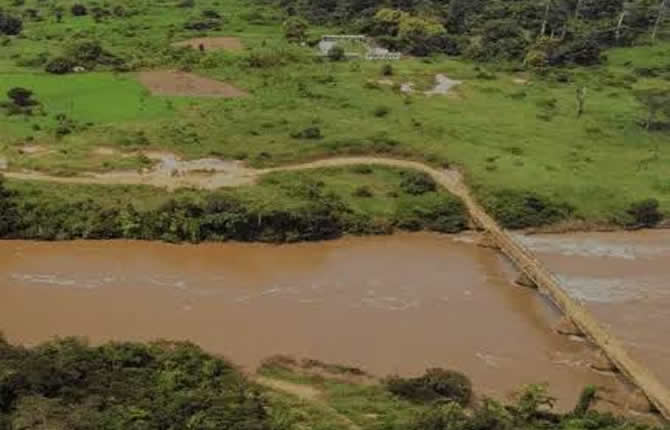
Savannah Energy et le Cameroun signent un accord pour Bini à Warak : 95 MW hydro-solaire, 393 milliards FCFA… mais le compte n’y est pas encore
Le groupe britannique Savannah Energy a officialisé, en octobre 2026, la signature d’un accord de développement conjoint (Joint Development Agreement – JDA) avec l’État du Cameroun. Objectif : relancer le projet hydro-solaire de Bini à Warak, dans la région de l’Adamaoua. Dans son actualisation opérationnelle et financière du 30 octobre, l’entreprise précise que cet accord cadre la collaboration pour une infrastructure annoncée à 95 MW. Le Document de programmation économique et budgétaire à moyen terme 2027-2029 du gouvernement valorise le projet à 393 milliards de FCFA.
Plus de trois ans après le protocole d’accord du 20 avril 2023 avec Savannah Energy RCM Limited, le nouveau partenariat s’inscrit dans un modèle de producteur indépendant d’électricité (IPP). Un opérateur privé développe et finance l’installation, puis vend l’électricité produite selon des conditions encore à définir.
Le projet a radicalement changé de visage. Le 7 février 2013, le gouvernement avait confié à la chinoise Sinohydro Corporation Limited la construction d’un aménagement purement hydroélectrique de 75 MW en contrat clé en main. La suspension du financement en 2019 avait tout stoppé. Savannah Energy mise désormais sur une combinaison hydroélectricité + solaire photovoltaïque, avec 40 MW solaires pour une puissance totale pouvant atteindre 95 MW. Un chiffre légèrement supérieur aux 90 MW retenus par Yaoundé dans sa programmation budgétaire. Les documents disponibles n’expliquent pas cet écart.
La signature du JDA ne signifie pas que le financement est bouclé. Savannah Energy ne communique ni le coût actualisé de l’investissement selon ses propres estimations, ni les financements déjà sécurisés, ni les conditions de vente de l’électricité. Aucune nouvelle date de clôture financière ou de démarrage des travaux n’est annoncée.
Le calendrier a déjà largement glissé. En 2023, Savannah évoquait une première production entre 2027 et 2028. Aujourd’hui, le groupe table sur une clôture financière au troisième trimestre 2028, une première production solaire en 2030 et une mise en service de la partie hydroélectrique environ quatre ans après l’approbation définitive. Le gouvernement, de son côté, programme la réalisation entre 2029 et 2033 dans le cadre d’un partenariat public-privé de 393 milliards de FCFA.
La relance s’accompagne d’un audit. Le 11 septembre 2026, le ministère de l’Eau et de l’Énergie a confié au groupement Brainstorm Consulting SARL / Moore Stephen CA / Labogext un marché de 47,5 millions de FCFA TTC pour un audit technique et financier de trois mois. Mission : vérifier les travaux réellement réalisés, les montants investis et les paiements effectués sous le montage Sinohydro. Les conclusions de cet audit n’ont pas encore été rendues publiques.
Savannah pourrait aussi diluer sa participation. Dans son rapport annuel 2024 (publié en octobre 2025), le groupe envisageait de réduire d’environ 50 % sa part avant la clôture financière pour faire entrer de nouveaux investisseurs. La communication du 30 octobre 2026 reste muette sur ce point.
Cotco et Tchad : les arbitrages qui pèsent lourd
Parallèlement, Savannah Energy maintient son objectif de conclure avant fin 2026 les procédures arbitrales liées à ses droits dans Cameroon Oil Transportation Company (Cotco), l’exploitante de la section camerounaise de l’oléoduc Tchad-Cameroun. Sa filiale Savannah Midstream Investment Limited (SMIL) réclame environ 330 millions de dollars de dommages et intérêts, plus de 67 millions de dollars d’intérêts et les frais de procédure, soit plus de 397 millions de dollars (environ 228,6 milliards de FCFA selon la conversion d’Investir au Cameroun du 28 septembre 2026).
L’arbitrage devant la Chambre de commerce internationale (CCI) implique cinq défendeurs, dont la Société nationale des hydrocarbures (SNH), l’État tchadien et Cotco. Les demandes reconventionnelles contre Savannah s’élèvent à environ 58,7 millions de dollars (hors intérêts et frais). Savannah les conteste.
Au Cameroun, le contentieux porte sur les droits d’actionnaire, de gouvernance et d’exploitation revendiqués par SMIL dans Cotco, qui gère les 903 km de la section camerounaise et le terminal maritime Komé-Kribi 1.
L’acquisition de 10 % de Cotco par la SNH reste inachevée. L’accord du 19 avril 2023 porte sur 44,9 millions de dollars. La SNH a versé la somme, mais le transfert définitif des actions est conditionné à la modification des statuts de Cotco. Dans ses comptes 2025, la SNH a comptabilisé une dépréciation de 10,765 milliards de FCFA (40 % de sa créance de 26,9 milliards de FCFA), signalant un risque de non-recouvrement partiel. Savannah affiche toujours une participation indirecte de 41,06 % dans Cotco, qui passerait à 31,06 % après cession effective des 10 %.
Au Tchad, les enjeux sont encore plus lourds. Après la nationalisation en mars 2023 de ses droits dans les champs de Doba et de son investissement dans TOTCo, les filiales Savannah Chad Inc. (SCI) et SMIL réclament plus de 775 millions de dollars de principal, plus de 215 millions de dollars d’intérêts et les frais. L’État tchadien a présenté des demandes reconventionnelles d’environ 699,1 millions de dollars. Selon Savannah, les autorités tchadiennes ont reconnu le droit à compensation, mais aucun versement n’avait été effectué au 30 octobre 2026. Un autre arbitrage distinct sur l’accord d’exploitation des champs de Doba voit des entités liées à la Société des hydrocarbures du Tchad réclamer entre 110,9 et 136,9 millions de dollars à SCI. Savannah prévoit sa conclusion en 2027.
Pour les arbitrages Cotco et actifs nationalisés au Tchad, le groupe conserve le quatrième trimestre 2026 comme horizon. Aucune sentence arbitrale ni accord de règlement n’a été annoncé au 30 octobre.
Entre un projet énergétique stratégique pour l’Adamaoua encore loin de la clôture financière et des contentieux pétroliers qui se comptent en centaines de millions de dollars, Savannah Energy navigue en eaux troubles. Le Cameroun, lui, attend des avancées concrètes sur le terrain de l’énergie… et de la justice commerciale.
Savannah Energy and Cameroon Sign Joint Development Agreement for Bini à Warak Hydro-Solar Project: 95 MW, CFA 393 Billion… Financing Still Unclear
British group Savannah Energy announced in October 2026 the signing of a Joint Development Agreement (JDA) with the Cameroonian State to advance the Bini à Warak hydro-solar project in the Adamaoua region. In its operational and financial update published on 30 October, the company stated that the agreement sets the framework for collaboration on the infrastructure, with an announced capacity of 95 MW. The project is valued at CFA 393 billion in Cameroon’s 2027-2029 medium-term economic and budgetary programming document.
This signature comes more than three years after the Memorandum of Understanding signed on 20 April 2023 between the government and Savannah Energy RCM Limited, a subsidiary of the British group. The new partnership aims to develop the project under an Independent Power Producer (IPP) model, in which a private operator develops and finances the facility and then sells the electricity under contractual terms still to be defined.
The project configuration has changed significantly since its original design. On 7 February 2013, the government awarded Chinese company Sinohydro Corporation Limited a turnkey contract for a purely hydroelectric scheme of 75 MW. Funding suspension in 2019 halted progress. Savannah Energy now plans a hybrid hydroelectric and photovoltaic solar infrastructure, including 40 MW of solar capacity for a total announced power of up to 95 MW.
This figure differs slightly from the 90 MW retained by the government in its 2027-2029 Document de programmation économique et budgétaire à moyen terme. Available documents do not explain the discrepancy.
Signing the new agreement does not mean project financing is secured. In its 30 October 2026 communication, Savannah Energy provided neither an updated investment cost according to its own estimates, nor details of financing already obtained, nor the terms for electricity sales. The group also announced no new date for financial close or construction start.
These details remain awaited as the project timeline has already slipped. At the time of the April 2023 MoU, Savannah Energy envisaged first electricity production between 2027 and 2028. In later communications, the group targeted financial close in the third quarter of 2028, first solar production in 2030, and hydroelectric commissioning roughly four years after final project approval. The government now programmes implementation of Bini à Warak between 2029 and 2033 under a public-private partnership valued at CFA 393 billion.
The project relaunch is accompanied by a review of expenditure incurred in the first phase. On 11 September 2026, the Ministry of Water and Energy awarded the consortium Brainstorm Consulting SARL / Moore Stephen CA / Labogext a CFA 47.5 million (TTC) contract to carry out a technical and financial audit of Bini à Warak, with a three-month execution period. The mission is to establish the works actually completed, verify amounts invested, and examine payments made under the previous Sinohydro arrangement. The audit conclusions have not been found in the documents consulted.
Financing of the new project could also lead Savannah Energy to bring in other investors. In its 2024 annual report published in October 2025, the group contemplated reducing its own participation by around 50% before financial close in order to introduce new partners. Its 30 October 2026 communication does not confirm whether this approach has been maintained or what stake Savannah would retain in the future project.
Cotco and Chad: Ongoing Arbitrations
Meanwhile, Savannah Energy maintains its objective of concluding by the end of 2026 the arbitration proceedings concerning its rights in Cameroon Oil Transportation Company (Cotco), which operates the Cameroonian section of the Chad-Cameroon pipeline. In its 30 October 2026 operational and financial update, the company reaffirmed a deadline already announced a month earlier. Its subsidiary Savannah Midstream Investment Limited (SMIL) is claiming approximately USD 330 million in damages, plus more than USD 67 million in interest and procedural costs.
The claim totals more than USD 397 million, or about CFA 228.6 billion according to the indicative conversion published by Investir au Cameroun on 28 September 2026. The arbitration before the International Chamber of Commerce (ICC) involves five respondents, including the Société nationale des hydrocarbures (SNH), the Chadian State and Cotco. The amounts claimed do not correspond to awarded compensation. Public documents also do not allow determination of the potential share attributable to each respondent.
The dispute also includes financial claims against Savannah. According to the British group, the Republic of Chad, SHT Overseas Petroleum (Cameroon) Limited, Cotco and certain other shareholders have filed counterclaims totalling approximately USD 58.7 million, excluding interest and costs. Savannah contests their merits.
In Cameroon, the litigation concerns the shareholder, governance and operating rights claimed by SMIL in Cotco. The company operates the 903 km Cameroonian section of the pipeline and the Komé-Kribi 1 marine terminal used for exporting Chadian oil.
A still-incomplete 10% acquisition of Cotco
This dispute arises while SNH is still awaiting the legal finalisation of its acquisition of 10% of Cotco’s capital from SMIL. The agreement signed on 19 April 2023 covers USD 44.9 million. The Cameroonian public company has paid this sum, but the definitive transfer of the shares remains subject to legal conditions, including amendment of Cotco’s articles of association.
In its 2025 accounts, SNH recorded an impairment of CFA 10.765 billion, corresponding to 40% of its CFA 26.9 billion receivable linked to the transaction, as revealed by Investir au Cameroun on 24 July 2026. This impairment reflects a partial non-recovery risk without establishing a definitive loss.
Savannah continues to report an indirect 41.06% participation in Cotco. This would be reduced to 31.06% after effective completion of the 10% sale to SNH. Available documents do not allow the USD 330 million claimed in the arbitration to be equated solely with the blockage of this transaction.
In Chad, claims exceeding USD 990 million
Alongside the Cotco case, Savannah is pursuing two other arbitrations linked to the March 2023 nationalisation of its rights in the Doba oil fields and its investment in TOTCo, the company operating the Chadian section of the pipeline.
Its subsidiaries Savannah Chad Inc. (SCI) and SMIL are claiming more than USD 775 million in principal, plus interest estimated at more than USD 215 million, as well as procedural costs. In response, the Chadian State has presented counterclaims of approximately USD 699.1 million, excluding interest and costs.
According to Savannah, the Chadian authorities have recognised its subsidiaries’ right to compensation, but no payment had been made as of 30 October 2026. The company states it remains willing to negotiate an amicable solution.
The group distinguishes these proceedings from another arbitration concerning the Doba oil fields operating agreement. In that case, entities designated by the Société des hydrocarbures du Tchad are claiming between USD 110.9 and 136.9 million from SCI, excluding interest and costs. Savannah expects this procedure to conclude in 2027.
For the Cotco and nationalised Chad assets arbitrations, the company continues to retain the fourth quarter of 2026 as the target horizon for conclusion. Its 30 October communication, however, reports no arbitral award rendered nor any settlement agreement reached.
Between a strategic energy project for Adamaoua that remains far from financial close and oil-related disputes measured in hundreds of millions of dollars, Savannah Energy is navigating complex waters. Cameroon, for its part, continues to await concrete progress on the energy front… and in commercial justice.
Savannah Energy, Bini à Warak, projet hydro-solaire Cameroun, Adamaoua, 95 MW, IPP Cameroun, 393 milliards FCFA, Cotco, arbitrage Savannah, oléoduc Tchad-Cameroun, Sinohydro, énergie Cameroun, transition énergétique Adamaoua, Savannah Midstream, SNH
Silognhia Edwige
Le calendrier complet de la Can Féminine 2026
Suivez certains matchs en direct grâce à nos partenaires
Articles similaires
 Société
Cameroun : l’État va ponctionner directement la DGD 2027 pour éponger les dettes des collectivités
Le gouvernement camerounais prévoit de prélever sur la DGD 2027 la part des collectivités...
 Société
Rutile au Cameroun : 21 permis miniers attendus, mais la signature se fait toujours désirer
Tusker Minerals obtient un avis favorable pour 21 permis de recherche au Cameroun (rutile, zircon)....
 Société
CDEC : plus de 80 % de ses milliards investis dans la dette camerounaise, ce qui va changer en 2028
La CDEC a réalisé 61,2 milliards FCFA de transactions en 2026, avec plus de 80 % investis dans la...
 Société
L'UDC lance le « Contrat Républicain » : l’opposition camerounaise appelée à s’unir ou à disparaître
Le 5 novembre 2026 à Douala, l’UDC de Tomaino Ndam Njoya dévoile son plan de mutualisation des...
 Société
Pirates en mer d’Arabie : L’Inde lance un commando héliporté et sauve 20 pêcheurs iraniens en 48h de traque
Opération spectaculaire de la marine indienne : un commando héliporté libère 20 membres d’équipage...
 Société
Élections de mi-mandat US : les Démocrates freinent sur une 3e destitution de Trump, l’Europe ne compte plus sur un « reset », et l’Amérique s’enfonce dans les crises
Mi-mandat 2026 : les Démocrates doutent d’une nouvelle destitution de Trump malgré une large...