
Iran : Téhéran refuse de plier face à la « guerre économique » de Trump
Les États-Unis brandissent le bâton. L’Iran sort le bouclier. Et les partenaires de Téhéran, eux, continuent tranquillement leurs affaires. Voilà le portrait brut de la nouvelle escalade entre Washington et la République islamique.
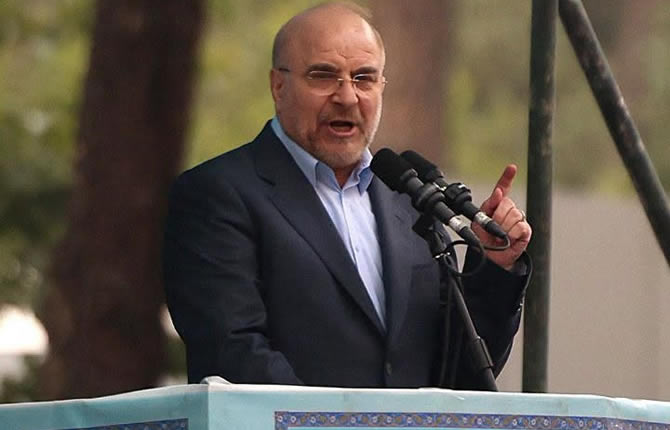
Le président du Parlement iranien, Mohammad Bagher Ghalibaf, a lâché le verdict sur X : les pays qui commerçant avec l’Iran « ne prennent pas au sérieux » les menaces américaines. « Les Américains eux-mêmes savent que personne ne croit plus à leurs déclarations fracassantes », a-t-il affirmé. Selon lui, Washington n’est même plus en position économique de dicter sa loi au reste du monde.
De l’autre côté de l’Atlantique, le ton est martelé. Donald Trump a annoncé le début d’une « guerre économique et d’un isolement » d’une ampleur jamais vue. Le secrétaire au Trésor, Scott Bessent, a officialisé l’« opération Paria économique ». Objectif clair : couper toutes les sources de revenus du régime, en particulier celles qui alimentent le Corps des Gardiens de la Révolution. « Nous ne laisserons aucune place à la fuite », a-t-il martelé. 48 entités, 24 personnes et six pétroliers ont déjà été ajoutés à la liste noire. Des entreprises et ressortissants d’Azerbaïdjan, de Chine, d’Inde, des Émirats, de Turquie, de France et même de Suisse sont dans le viseur.
Bessent a prévenu : ceux qui facilitent le pétrole iranien ou les transactions seront frappés. Trump téléphone lui-même aux dirigeants étrangers pour leur ordonner de couper les ponts. « Le président sait se montrer très persuasif », a ironisé le secrétaire au Trésor.
Pourtant, Téhéran ne baisse pas la garde. Le commandant de l’armée iranienne, Amir Hatami, a martelé que l’Iran n’est « pas un terrain d’expérimentation » pour les plans américains ou israéliens. « Nous nous battrons pendant dix, vingt générations », a-t-il lancé. Le porte-parole du ministère des Affaires étrangères, Esmail Baghaei, est allé plus loin : les pays qui hébergent des troupes américaines deviennent des cibles légitimes. Le blocus maritime, restauré par les États-Unis depuis mi-juillet, est qualifié d’« acte d’agression ». « Tout soutien aux actions illégales de Washington aura de graves conséquences », a-t-il prévenu.
Dans ce climat de bras de fer, le Pakistan tente de jouer les intermédiaires. Le ministre de l’Intérieur Mohsin Raza Naqvi a annoncé des « progrès considérables » après la visite d’une délégation pakistanaise à Téhéran, dirigée par le chef de l’armée Asim Munir. Islamabad rappelle que le mémorandum de juin doit servir de base. La Chine et la Jordanie, de leur côté, ont appelé conjointement au rétablissement de la navigation dans le détroit d’Ormuz et au maintien du cessez-le-feu.
Pendant ce temps, les États-Unis annuleraient même des exercices militaires avec la Corée du Sud, arguant de la situation au Moyen-Orient. Signe que l’attention de Washington est bien concentrée sur le Golfe.
La diplomatie iranienne, elle, se décrit désormais comme un mélange d’échecs et de poker. Calcul long terme et coups risqués. Une chose est claire : Téhéran refuse catégoriquement les conditions dictées par « l’agresseur ».
Entre sanctions secondaires qui s’annoncent plus dures encore, médiation pakistanaise fragile et avertissements iraniens de plus en plus durs, la région reste sur le fil. Qui pliera le premier ? Pour l’instant, ni Washington ni Téhéran ne donnent l’impression de reculer d’un pas.
Iran Defies Trump: “No One Believes America’s Threats Anymore” – Economic War, Pakistani Mediation and Hormuz Tensions
The United States is swinging the stick. Iran is raising its shield. And Tehran’s trading partners keep doing business as usual. That is the raw picture of the latest escalation between Washington and the Islamic Republic.
Iranian Parliament Speaker Mohammad Bagher Ghalibaf stated bluntly on X that countries dealing with Iran “do not take U.S. threats seriously.” “The Americans themselves know that no one believes their bombastic statements anymore,” he said. According to him, the United States is no longer in an economic position to dictate terms to the rest of the world.
On the other side of the Atlantic, the message is hammered home. Donald Trump announced the start of an “economic war and isolation” of Iran on an unprecedented scale. Treasury Secretary Scott Bessent formalized “Operation Economic Pariah.” The goal is clear: cut off every revenue source funding the regime, especially the Islamic Revolutionary Guard Corps. “We are leaving no room for escape,” he declared. Already, 48 entities, 24 individuals and six oil tankers have been added to the blacklist, involving nationals and companies from Azerbaijan, China, India, the UAE, Turkey, France, Switzerland and others.
Bessent warned that anyone facilitating Iranian oil or transactions will be targeted. Trump himself is calling foreign leaders to demand they sever ties. “The president knows how to be very persuasive,” the Treasury chief noted dryly.
Tehran is not backing down. Iranian army commander Amir Hatami insisted that Iran will never become “a testing ground” for American or Israeli plans. “We will fight for ten generations, twenty generations,” he said. Foreign Ministry spokesman Esmail Baghaei went further: countries hosting U.S. troops are considered complicit and their military facilities become legitimate targets. The maritime blockade, reinstated by the United States since mid-July, is labelled an “act of aggression.” “Any support for America’s illegal actions will have serious consequences,” he warned.
Amid the standoff, Pakistan is attempting mediation. Interior Minister Mohsin Raza Naqvi reported “significant progress” after a Pakistani delegation visit to Tehran led by army chief Asim Munir. Islamabad insists the June memorandum should serve as the foundation. China and Jordan jointly called for the restoration of normal navigation in the Strait of Hormuz and the maintenance of the ceasefire.
Meanwhile, the United States has even cancelled joint amphibious exercises with South Korea, citing the Middle East situation — a sign that Washington’s focus remains locked on the Gulf.
Iranian diplomacy now describes itself as a mix of chess and poker: long-term calculation combined with high-stakes moves. One thing is clear: Tehran flatly rejects any conditions dictated by “the aggressor.”
With secondary sanctions set to tighten further, fragile Pakistani mediation and increasingly sharp Iranian warnings, the region remains on a knife-edge. Who will blink first? For now, neither Washington nor Tehran shows any sign of stepping back.
Iran États-Unis, sanctions Trump Iran, guerre économique Iran, Mohammad Bagher Ghalibaf, Scott Bessent, opération Paria économique, médiation Pakistan Iran, détroit d’Ormuz, cessez-le-feu Iran USA, Esmail Baghaei, Corps des Gardiens, blocus maritime Iran, tensions Moyen-Orient 2026
Moussa Nassourou
Le calendrier complet de la Can Féminine 2026
Suivez certains matchs en direct grâce à nos partenaires
Articles similaires
 Société
FBI piraté par ShinyHunters, réfugiés afrikaners aux USA, Groenland sous contrôle américain : Trump secoue la planète en 48 heures
Hackers ShinyHunters frappent le FBI, Trump accueille 17 500 Afrikaners, accord sur le Groenland et...
 Société
Présidentielle 2027 : Marine Tondelier accouche après une réunion à l'Élysée et promet de « travailler différemment »
Marine Tondelier a accouché d'un garçon quelques heures après une réunion avec Macron. En...
 Société
CPI : l’ancien chef de la Séléka Mahamat Saïd reconnu coupable pour les crimes de 2013
La CPI reconnaît Mahamat Saïd coupable de crimes contre l’humanité commis en Centrafrique en 2013....
 Société
Afrique en feu : Tigré reprend les armes, massacre en Afrique du Sud, 4 tonnes de cocaïne saisies au Ghana… et Ceuta sous pression marocaine
Tensions explosives au Tigré, 11 morts dans une fusillade en Afrique du Sud, un réseau de drogue de...
 Société
Isolement de l’AES : le chef de la diplomatie togolaise dénonce une erreur qui menace toute la région
Sur France 24, Robert Dussey affirme que isoler l'AES était une erreur : le Mali, le Niger et le...
 Société
L'ONU s'attaque enfin à l'IA : Anthropic, OpenAI et Hugging Face convoqués au Conseil de sécurité — pendant que Trump et Macron s'affrontent sur l'avenir du monde
C'est historique : pour la première fois, le Conseil de sécurité de l'ONU se saisit des risques de...