
Iran-États-Unis : la rupture s'accélère, entre guerre du dollar et blocus du détroit d'Ormuz
Le ton monte encore d'un cran entre Téhéran et Washington. En l'espace de quelques jours, les deux capitales ont multiplié les déclarations qui dessinent les contours d'un affrontement désormais autant économique que militaire, avec en toile de fond un détroit d'Ormuz sous très haute tension.
Téhéran veut tourner la page du dollar
C'est une déclaration qui ne doit rien au hasard. Le président du Parlement iranien, Mohammad Bagher Ghalibaf, a estimé lors d'un forum économique à Bagdad que les paiements en dollars entre pays relèvent désormais d'une "méthode obsolète" pour régler les échanges commerciaux. Selon lui, "l'ère de l'hégémonie mondiale des États-Unis est révolue", mais l'Iran et ses partenaires n'auraient pas encore pleinement saisi cette opportunité de basculer vers les monnaies locales.
M. Ghalibaf a également insisté sur le poids géopolitique de la région, évoquant un corridor stratégique reliant l'Iran et l'Irak à la Méditerranée, qu'il présente comme un axe clé de la puissance et de l'indépendance des pays qui le composent.
Du côté du pouvoir exécutif, le président Massoud Pezechkian a lui aussi adopté un ton offensif, jugeant que l'Iran se trouve "en position de force" pour négocier la fin des hostilités. Cité par l'agence Etemad Online, il a accusé Washington de viser des écoles, des hôpitaux et des infrastructures civiles, tout en affirmant que "le monde entier reconnaît notre victoire".
Washington annonce une "guerre économique et d'isolement" sans précédent
Ces déclarations interviennent après l'annonce, par le président américain Donald Trump, du lancement d'une campagne de "guerre économique et d'isolement" contre l'Iran, présentée comme inédite par son ampleur. La Maison-Blanche a prévenu que tout pays dont les institutions financières, entreprises, aéroports ou structures étatiques apporteraient un soutien à Téhéran s'exposerait à de lourdes sanctions économiques américaines.
Le secrétaire au Trésor, Scott Bessent, a durci le message sur le réseau X, affirmant que "tout lien restant avec Téhéran accélérera le déclin économique" des pays concernés, que ces liens soient délibérés ou "sciemment ignorés".
À Mumbai, le consul général iranien Saeid Reza Mosayeb Motlagh a rétorqué que ce recours systématique aux menaces et aux pressions traduirait, selon lui, une forme de "faiblesse" américaine, Washington étant contraint de solliciter l'appui de ses alliés pour faire aboutir sa stratégie.
Le détroit d'Ormuz, nerf de la guerre
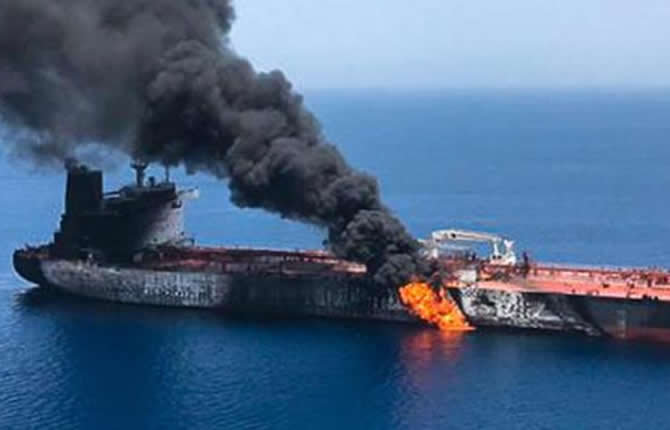
Sur le terrain, la pression se matérialise concrètement autour du détroit d'Ormuz, passage obligé d'une part majeure du trafic pétrolier mondial. Selon la société d'analyse Kpler, citée par Reuters, seuls sept navires transportant des matières premières ont emprunté cette voie jeudi, soit deux fois moins que la veille — un signe des inquiétudes croissantes pesant sur la navigation régionale.
Depuis la reprise du blocus naval le 14 juillet, le Commandement central américain (Centcom) affirme avoir dérouté 67 navires commerciaux, immobilisé trois autres et procédé à l'abordage de deux embarcations. Le porte-avions USS George Washington est arrivé mercredi dans la région pour renforcer ce dispositif, en remplacement du USS Abraham Lincoln.
Conséquence directe sur les marchés : le baril de Brent a franchi la barre des 94 dollars sur l'ICE, un niveau plus revu depuis fin juillet, tandis que le Financial Times rapporte une flambée du prix des pétroliers, certains navires de la plus grande catégorie dépassant désormais les 130 millions de dollars — un record depuis 2008.
Oman, la Russie et la Chine appellent à la retenue
Les menaces américaines ne se limitent pas à l'Iran. Selon le portail Al-Monitor, des sources omanaises se disent "perplexes" face aux menaces de Donald Trump visant à "bombarder" le sultanat, accusé d'avoir fait trop de concessions à Téhéran dans les négociations sur le détroit d'Ormuz. Mascate assure avoir tenu Washington informé de l'avancée des discussions à chaque étape.
À l'ONU, le représentant permanent de la Russie, Vassili Nebenzia, s'est interrogé sur la légalité, au regard du droit international, d'une éventuelle revendication américaine sur le détroit d'Ormuz — tout en qualifiant Donald Trump de dirigeant qui reste "maître de sa parole".
Pékin, de son côté, a appelé à la désescalade. Le porte-parole du ministère chinois des Affaires étrangères, Lin Jian, a estimé que "les sanctions et les pressions ne permettront pas de stabiliser la situation", plaidant pour un règlement diplomatique.
Téhéran met en avant sa résilience militaire
Sur le plan intérieur, le ministère iranien de la Défense a profité de la Journée de l'industrie de défense, célébrée le 21 août, pour souligner que les récentes hostilités auraient servi de "véritable terrain d'essai" pour les capacités militaires nationales. Le ministère assure que les technologies développées ces dernières années par les spécialistes iraniens ont, une fois testées, permis de contrer une partie significative des objectifs adverses.
Iran Turns Its Back on the Dollar as Trump Launches "Unprecedented" Economic War
Iran's parliament wants to ditch the dollar, Trump vows to isolate Tehran economically — here's what's really unfolding in the Middle East.
Iran and the United States: Tensions Escalate Over the Dollar and the Strait of Hormuz
The rift between Tehran and Washington is deepening. Within a matter of days, both capitals have ramped up statements that point to a confrontation now playing out on economic as much as military terrain, with the Strait of Hormuz at the center of the storm.
Tehran Wants to Move Past the Dollar
The timing of the statement is no accident. Iranian parliament speaker Mohammad Bagher Ghalibaf told an economic forum in Baghdad that dollar-based payments between countries are now an "outdated method" for settling trade. In his view, "the era of US global hegemony is over," though he argued Iran and its partners have yet to fully seize the opportunity to shift toward local currencies for commercial payments.
Ghalibaf also stressed the region's particular geopolitical weight, pointing to a strategic corridor linking Iran and Iraq to the Mediterranean, which he described as a core element of power and independence for the countries along it.
On the executive side, President Masoud Pezeshkian struck an equally assertive tone, arguing that Iran is negotiating from a "position of strength." Quoted by the Etemad Online news agency, he accused Washington of striking schools, hospitals and civilian infrastructure, while claiming that "the whole world recognizes our victory."
Washington Announces an "Unprecedented" Economic War and Isolation Campaign
These statements follow US President Donald Trump's announcement of an economic war and isolation campaign against Iran, described as unprecedented in scale. The White House warned that any country whose financial institutions, companies, airports or state structures provide support to Tehran would face severe US economic consequences.
Treasury Secretary Scott Bessent hardened the message on X, saying that "any remaining ties to Tehran will accelerate the economic decline" of the countries involved — whether those ties are deliberate or "knowingly ignored."
In Mumbai, Iran's consul general Saeid Reza Mosayeb Motlagh countered that this pattern of threats and pressure reflects, in his view, a form of American "weakness," arguing that Washington now needs its allies' help to make the strategy succeed.
The Strait of Hormuz, at the Heart of the Conflict
On the ground, the pressure is playing out concretely around the Strait of Hormuz, a chokepoint for a major share of global oil traffic. According to analytics firm Kpler, cited by Reuters, only seven vessels carrying commodities passed through the strait on Thursday — half the previous day's number — reflecting growing concerns over shipping safety in the region.
Since the naval blockade resumed on July 14, US Central Command (CENTCOM) says it has diverted 67 commercial vessels, disabled three others, and boarded two more. The USS George Washington carrier strike group arrived in the region on Wednesday to reinforce the deployment, replacing the USS Abraham Lincoln.
The direct market impact: Brent crude futures topped $94 a barrel on ICE, the highest level since late July, while the Financial Times reports a sharp rise in tanker prices, with some of the largest vessels now trading above $130 million — the highest since 2008.
Oman, Russia and China Call for Restraint
The US threats are not limited to Iran. According to Al-Monitor, Omani sources say they are "puzzled" by Trump's threats to "bomb" the sultanate, which Washington accuses of making too many concessions to Tehran in talks over the Strait of Hormuz. Muscat says it kept the US informed of the negotiations' progress at every stage.
At the United Nations, Russia's permanent representative Vassily Nebenzia questioned the legality, under international law, of any US claim over the Strait of Hormuz — while describing Trump as a leader who remains "true to his word."
Beijing, for its part, called for de-escalation. Chinese Foreign Ministry spokesperson Lin Jian said "sanctions and pressure will not help stabilize the situation," urging a diplomatic resolution.
Tehran Highlights Its Military Resilience
Domestically, Iran's Ministry of Defense used National Defense Industry Day on August 21 to argue that recent hostilities served as a genuine "testing ground" for the country's military capabilities. The ministry claims that technologies developed over years by Iranian specialists, once tested in practice, helped thwart a significant share of adversaries' objectives.
Iran États-Unis, guerre économique Iran, détroit d'Ormuz, dollar hégémonie, Donald Trump Iran, sanctions Iran, Mohammad Bagher Ghalibaf, Massoud Pezechkian, Centcom Iran, porte-avions George Washington, prix du pétrole Brent, blocus naval Iran, Oman Iran États-Unis, Scott Bessent sanctions, axe de la résistance, industrie de défense iranienne, Reuters Ormuz, Financial Times pétroliers, isolement économique Téhéran, tensions Moyen-Orient 2026 Iran United States, Iran economic war, Strait of Hormuz, dollar hegemony, Donald Trump Iran, Iran sanctions, Mohammad Bagher Ghalibaf, Masoud Pezeshkian, CENTCOM Iran, USS George Washington carrier, Brent crude oil price, Iran naval blockade, Oman Iran United States, Scott Bessent sanctions, axis of resistance, Iranian defense industry, Reuters Hormuz, Financial Times tankers, Tehran economic isolation, Middle East tensions 2026
Moussa Nassourou
Le calendrier complet de la Can Féminine 2026
Suivez certains matchs en direct grâce à nos partenaires
Articles similaires
 Société
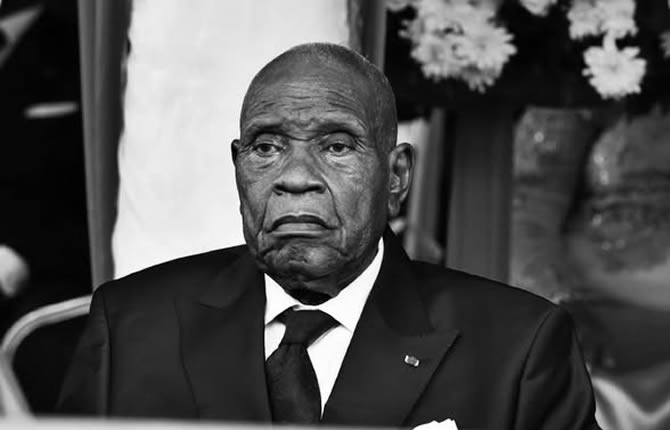
Clément Atangana est mort : le président du Conseil constitutionnel s’éteint à Paris à 85 ans
Le Cameroun est en deuil. Clément Atangana, président du Conseil constitutionnel et magistrat hors...
 Société
MTN Cameroon : pourquoi 2,34 milliards FCFA restent sous restriction judiciaire
MTN Cameroon ne compte plus que 2,34 milliards FCFA de trésorerie sous restriction fin 2025, contre...
 Société
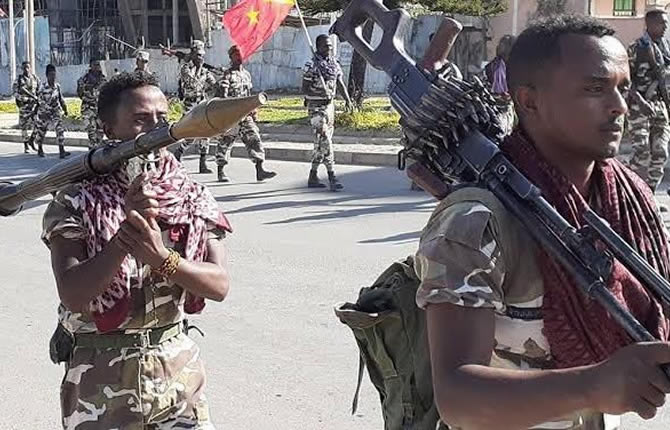
Tigré : les forces pro-gouvernementales annoncent la prise de l’aéroport de Mekele, la capitale sous tension
Éthiopie : les forces pro-gouvernementales affirment avoir pris l’aéroport de Mekele alors que les...
 Société
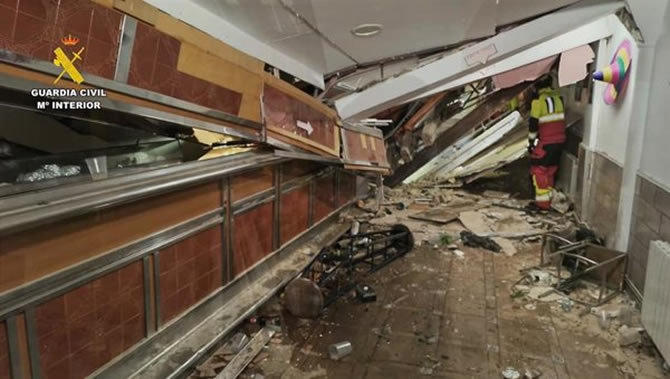
Drame en Espagne : un bar s’effondre sur près de 50 clients, au moins 12 blessés dont 6 hospitalisés
Au moins 12 personnes blessées après l’effondrement d’un bar à San Vicente de la Sonsierra, en...
 Société
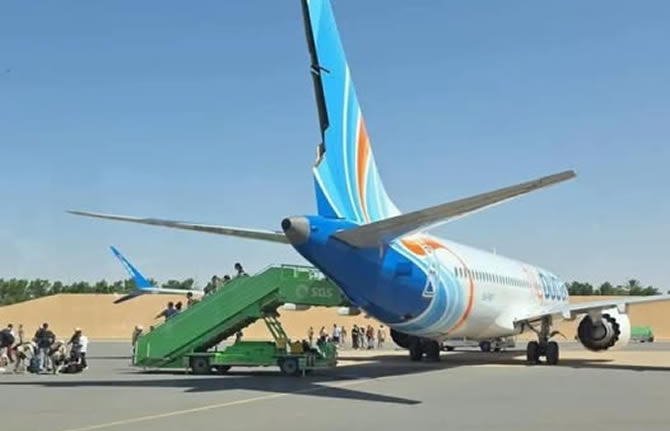
Flydubai : le copilote a frappé le commandant à la hache, les Émirats parlent d'attentat terroriste
Hache, cockpit, atterrissage d'urgence : les Émirats qualifient l'incident du vol Flydubai...
 Société
Diesel : Trump écarte toute interdiction aux États-Unis, l’Afrique du Sud hausse le ton contre Washington
Donald Trump écarte une interdiction des exportations de diesel aux États-Unis, tandis que...