
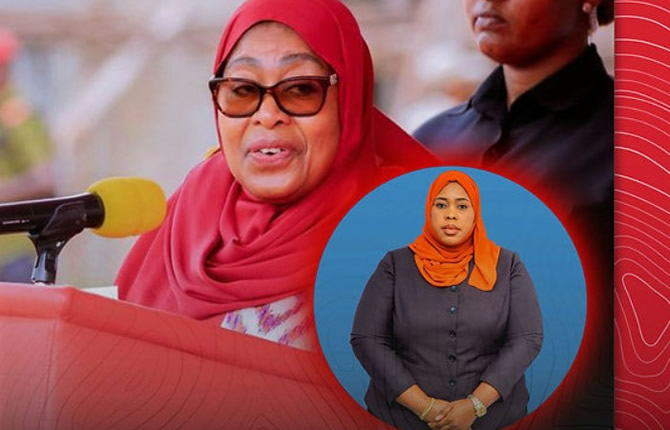
La Présidente tanzanienne Samia Suluhu Hassan a dévoilé lundi la composition de son nouveau gouvernement, une annonce qui a immédiatement suscité l'émoi au-delà des frontières du pays. Au cœur de la polémique : la nomination de sa propre fille et de son gendre à des postes ministériels clés, une décision perçue comme un acte de népotisme flagrant.
Selon les informations relayées par Africanews, Wanu Hafidh Ameir, la fille de la cheffe de l'État, a été nommée vice-ministre de l'Éducation. Dans le même temps, son gendre, Mohamed Mchengerwa, hérite du portefeuille stratégique de ministre de la Santé. Ce dernier n'est pas un novice en politique, ayant précédemment servi comme ministre d'État à la présidence chargé de l'administration régionale.
Une tendance africaine ?
Cette vague de nominations familiales ne s'arrête pas là. Le nouveau gouvernement, qui compte 27 ministres et 29 vice-ministres, intègre également Ridhiwani Kikwete, le fils de l'ancien président Jakaya Kikwete, nommé ministre d'État à la présidence.
Comme le souligne Africanews, cette pratique n'est malheureusement pas isolée sur le continent. Elle reflète une tendance observée dans des pays comme l'Ouganda, où la Première dame Janet Museveni dirige le ministère de l'Éducation et où leur fils, le général Muhoozi Kainerugaba, commande les forces de défense.
Stabilité et nouveaux visages
Malgré ces nominations controversées, la Présidente Hassan a justifié cette restructuration par la volonté d'« accroître l'efficacité du gouvernement et accélérer la matérialisation des priorités du développement national », rapporte le Daily News.
Certains ministères emblématiques voient leur dirigeant confirmé, à l'image de Mahmoud Thabit Kombo, qui conserve le ministère des Affaires étrangères. Le gouvernement accueille aussi de nouveaux visages, comme Raymond Nyasaho au ministère de la Défense et George Simbachawene, de retour au poste de ministre de l'Intérieur.
Ce remaniement intervient peu après la réélection écrasante de Samia Suluhu Hassan, créditée de 97,66% des voix lors du scrutin du 29 octobre. Alors que les nouveaux membres du gouvernement s'apprêtent à prêter serment, ces nominations créent un véritable test pour la perception de son leadership et de son engagement en faveur d'une gouvernance transparente.
Tanzania: President Samia Suluhu Hassan Appoints Daughter and Son-in-Law to Government, Sparking Nepotism Debate
The composition of the new Tanzanian government, marked by family appointments, raises questions about governance practices in Africa.
Tanzanian President Samia Suluhu Hassan unveiled the composition of her new government on Monday, an announcement that immediately caused a stir beyond the country's borders. At the heart of the controversy: the appointment of her own daughter and son-in-law to key ministerial positions, a decision perceived as a blatant act of nepotism.
According to information relayed by Africanews, Wanu Hafidh Ameir, the head of state's daughter, was appointed Deputy Minister of Education. At the same time, her son-in-law, Mohamed Mchengerwa, was given the strategic portfolio of Minister of Health. He is no novice in politics, having previously served as Minister of State in the President's Office for Regional Administration and Local Government.
An African Trend?
This wave of family appointments does not stop there. The new government, which includes 27 ministers and 29 deputy ministers, also integrates Ridhiwani Kikwete, the son of former President Jakaya Kikwete, appointed as Minister of State in the President's Office.
As Africanews points out, this practice is unfortunately not isolated on the continent. It reflects a trend observed in countries like Uganda, where First Lady Janet Museveni heads the Ministry of Education and their son, General Muhoozi Kainerugaba, commands the defense forces.
Stability and New Faces
Despite these controversial appointments, President Hassan justified this restructuring by the desire to "increase government efficiency and accelerate the realization of national development priorities," according to the Daily News.
Some emblematic ministries saw their leaders confirmed, such as Mahmoud Thabit Kombo, who retains the Ministry of Foreign Affairs. The government also welcomes new faces, such as Raymond Nyasaho at the Ministry of Defence and George Simbachawene, returning to the post of Minister of Home Affairs.
This reshuffle comes shortly after Samia Suluhu Hassan's landslide re-election, credited with 97.66% of the vote in the October 29 poll. As new government members prepare to be sworn in, these appointments create a real test for the perception of her leadership and her commitment to transparent governance.
Tanzanie, Samia Suluhu Hassan, gouvernement tanzanien, népotisme, nomination, Wanu Hafidh Ameir, Mohamed Mchengerwa, politique Afrique, Cameroun, Africanews, Daily News, Ridhiwani Kikwete, Ouganda, Museveni, élections Tanzanie, actualité africaine, gouvernance, scandale politique
Didier Cebas K.
Le calendrier complet de la Can Féminine 2026
Suivez certains matchs en direct grâce à nos partenaires
Articles similaires
 Société
Ebola au Nigeria, le Cameroun en alerte : 7 mesures d’urgence adoptées face au risque de propagation
Ebola au Nigeria : le Cameroun renforce sa préparation avec 7 mesures prioritaires. Surveillance,...
 Société
Cameroun : un patrouilleur américain de 691 millions de FCFA pour renforcer la sécurité maritime
Metal Shark décroche un contrat de 1,197 million de dollars pour livrer un patrouilleur 38 Defiant...
 Société
Cameroun : un investissement de 8,8 milliards de FCFA annoncé pour une usine d’engrais organiques
Cameroun : TMG International et l’indonésien Turrima envisagent une usine d’engrais organiques de...
 Société
Foumbot : un mort, une cargaison de cannabis… et à Pitoa, deux frères vendent les ossements de leur cousin
Accident mortel à Foumbot et découverte de cannabis, trafic d’ossements humains à Pitoa : deux...
 Société
Yaoundé : deux élèves tués par un camion après leur renvoi du lycée, la colère explose à Nsam
Drame au lycée technique de Nsam à Yaoundé : deux élèves auraient été tués par un camion après leur...
 Société
Feicom : 8,7 milliards FCFA confiés à une entreprise chinoise pour son agence du Centre, mais un détail cloche
Le Feicom attribue un marché de 8,722 milliards FCFA à China Shanxi Construction pour son agence...