
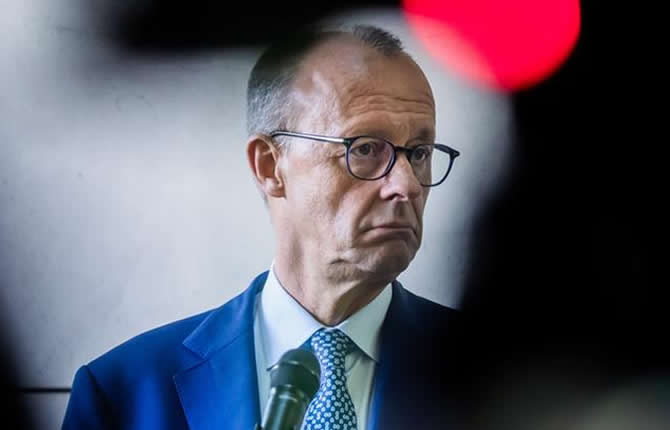
Allemagne : Merz sonne la fin de « l’amitié inconditionnelle » avec les États-Unis
Berlin, 17 septembre 2026 – C’est un séisme diplomatique que le chancelier allemand Friedrich Merz a provoqué ce jeudi. Devant les militants de la section berlinoise de l’Union chrétienne-démocrate (CDU), le chef du gouvernement fédéral n’a pas mâché ses mots : l’ère de « l’amitié transatlantique inconditionnelle » entre l’Allemagne et les États-Unis appartient « probablement au passé pour longtemps ».
« De l’autre côté de l’Atlantique, nous observons un changement de position politique, un changement y compris dans l’évaluation de l’Alliance transatlantique, que nous ne pouvions peut-être même pas imaginer », a-t-il déclaré, selon les propos rapportés par l’agence DPA.
Le message est clair, net et sans détour. Après des décennies où Berlin s’appuyait quasi automatiquement sur Washington, Merz trace une ligne rouge. Les temps ont changé. Les certitudes d’après-guerre s’effritent. Et l’Allemagne ne peut plus se contenter d’être un partenaire passif.
Dans le même souffle, le chancelier a appelé ses compatriotes et l’Europe entière à saisir l’opportunité qui s’ouvre. « Il est grand temps pour nous de prendre davantage de responsabilités pour nous-mêmes », a-t-il insisté. Preuve concrète de ce virage : le gouvernement fédéral a fortement augmenté ses dépenses de défense ces dernières années. Une décision qui n’est plus seulement une question de budget, mais un choix stratégique de souveraineté.
Ces déclarations interviennent dans un contexte de tensions visibles avec l’administration américaine. Les divergences se sont accumulées, notamment autour de questions de sécurité et de commerce. Merz, longtemps considéré comme un atlantiste convaincu, dresse désormais un diagnostic sans complaisance : le partenariat historique ne peut plus reposer sur une confiance aveugle.
Pour l’Afrique et le Cameroun en particulier, ce signal d’alarme venu de Berlin n’est pas anodin. Quand l’une des premières économies mondiales et un pilier de l’Europe décide de renforcer son autonomie stratégique, cela redessine les équilibres internationaux. Moins de dépendance transatlantique peut signifier, à terme, une Europe plus assertive sur la scène mondiale – y compris dans ses relations avec le continent africain.
Merz ne parle pas de rupture totale. Il parle de réalisme. D’une Allemagne qui, face à un monde en mutation, choisit de ne plus attendre que d’autres définissent son destin. Un message fort, presque de réveil, qui résonne bien au-delà des frontières européennes.
L’amitié reste possible. Mais elle ne sera plus jamais inconditionnelle. Et c’est peut-être le début d’une nouvelle ère pour l’Allemagne… et pour l’Europe.
Germany: Merz Declares the End of “Unconditional Friendship” with the United States
Berlin, 17 September 2026 – German Chancellor Friedrich Merz delivered a diplomatic earthquake on Thursday. Speaking at a pre-election event of the Berlin branch of the Christian Democratic Union (CDU), the head of the federal government did not mince his words: the era of “unconditional transatlantic friendship” between Germany and the United States “probably belongs to the past for a long time.”
“On the other side of the Atlantic, we are observing a change in political position, a change including in the assessment of the Transatlantic Alliance, which we perhaps could not even have imagined,” he stated, according to comments reported by the DPA news agency.
The message is clear, sharp and straightforward. After decades in which Berlin almost automatically relied on Washington, Merz is drawing a red line. Times have changed. Post-war certainties are crumbling. And Germany can no longer settle for being a passive partner.
In the same breath, the Chancellor called on his compatriots and Europe as a whole to seize the opportunity that is now opening up. “It is high time for us to take greater responsibility for ourselves,” he insisted. Concrete proof of this shift: the federal government has strongly increased its defence spending in recent years. A decision that is no longer merely a budgetary matter, but a strategic choice of sovereignty.
These statements come amid visible tensions with the American administration. Differences have piled up, particularly around security and trade issues. Merz, long regarded as a convinced Atlanticist, is now offering an uncompromising diagnosis: the historic partnership can no longer rest on blind trust.
For Africa and Cameroon in particular, this wake-up call from Berlin is not insignificant. When one of the world’s leading economies and a pillar of Europe decides to strengthen its strategic autonomy, it redraws international balances. Less transatlantic dependence could mean, in the longer term, a more assertive Europe on the global stage – including in its relations with the African continent.
Merz is not talking about a total rupture. He is talking about realism. About a Germany that, facing a changing world, chooses no longer to wait for others to define its destiny. A strong message, almost a call to awaken, that resonates far beyond European borders.
Friendship remains possible. But it will never again be unconditional. And this may well mark the beginning of a new era for Germany… and for Europe.
Friedrich Merz, relations Allemagne États-Unis, amitié transatlantique, alliance transatlantique, CDU Berlin, dépenses de défense Allemagne, Chancelier Merz, Donald Trump Allemagne, souveraineté européenne, OTAN Allemagne, politique étrangère allemande, changements fondamentaux Allemagne USA
Ekanga Ekanga Fernand
Le calendrier complet de la Can Féminine 2026
Suivez certains matchs en direct grâce à nos partenaires
Articles similaires
 Société
France : 54 milliards d’euros d’économies en 2027, Lecornu serre la vis sans augmenter les impôts
La France vise 54 milliards d’euros d’économies en 2027. Salaires, prestations, collectivités et...
 Société
Julian Assange réapparaît sur X après deux ans de silence : « Je suis de retour »
Après deux ans de silence sur X, Julian Assange signe son retour. Le fondateur de WikiLeaks avait...
 Société
Iran frappe un pétrolier togolais dans le détroit d’Ormuz : incendie à bord, le navire stoppé net
Les Gardiens de la révolution islamique ont frappé le pétrolier Trend (pavillon togolais) qui...
 Société
Succession de Maurice Kamto au MRC : trois candidats en lice, le processus entre dans une nouvelle phase
Le MRC a clôturé les candidatures pour succéder à Maurice Kamto. Tiriane Balbine Noah, Pierre...
 Société
Affaire MRC-Willy Mengue : le tribunal se déclare incompétent, le parti annonce une nouvelle procédure
Le Tribunal de première instance de Yaoundé-Ekounou s’est déclaré incompétent dans l’affaire MRC...
 Société
Douanes : le secteur Sud II a déjà mobilisé 162,9 milliards FCFA en 2026, le port de Kribi accélère
Le secteur des Douanes du Sud II a mobilisé 162,9 milliards FCFA depuis janvier 2026, porté par la...