
Cédéao : La Guinée de Mamadi Doumbouya définitivement réintégrée
La page des sanctions semble se tourner pour Conakry. La Communauté économique des États de l’Afrique de l’Ouest (Cédéao) a officiellement levé, avec effet immédiat, toutes les sanctions résiduelles imposées à la Guinée depuis le coup d’État de septembre 2021. Dans un communiqué, l’organisation salue « l’engagement et la détermination des autorités de transition » après l’adoption d’une nouvelle Constitution et la tenue d’une présidentielle fin 2023, remportée par le colonel Mamadi Doumbouya. Cette réhabilitation, qui suit celle de l’Union africaine, consolide la légitimité régionale du président installé. Signe de normalisation, Doumbouya a reconduit Amadou Oury Bah au poste de Premier ministre et annoncé un gouvernement resserré à 29 ministères.
Soudan du Sud et Soudan : Insécurité persistante et nouveaux partenariats
Alors que l'Union africaine exprime une "extrême préoccupation" face à la recrudescence des violences dans l'État de Jonglei au Soudan du Sud, les forces gouvernementales y ont repris deux localités clés aux rebelles. La situation humanitaire reste désastreuse. Au nord, au Soudan, Khartoum opère un virage géostratégique en accordant la priorité aux entreprises saoudiennes pour restaurer ses infrastructures, notamment ferroviaires et portuaires. Cette décision, prise après l'annulation d'un accord avec les Émirats arabes unis, illustre les recompositions d'alliances dans une région en proie à un conflit meurtrier depuis avril 2023.
Afrique du Sud : Double offensive sur l'identité et l'industrie
Johannesburg est le théâtre de deux batailles symboliques. D'une part, le gouvernement poursuit sa politique de "décolonisation" toponymique en approuvant le changement de nom de plus de 20 lieux, dont East London qui deviendra KuGompo City. D'autre part, le régulateur étudie une hausse massive des droits de douane sur les véhicules importés (jusqu'à 50%) pour protéger l'industrie locale, fragilisée par l'arrivée massive de marques chinoises. Cette tension économique se double d'une crise sociale : les mouvements anti-immigration, comme Opération Dudula, manifestent violemment contre la scolarisation d'enfants de migrants illégaux, conduisant à l'arrestation d'une de leurs figures, Jacinta Ngobese-Zuma.
Affaires et Diplomatie : Le Rwanda attaque le Royaume-Uni, l'Éthiopie frappe un réseau de traite
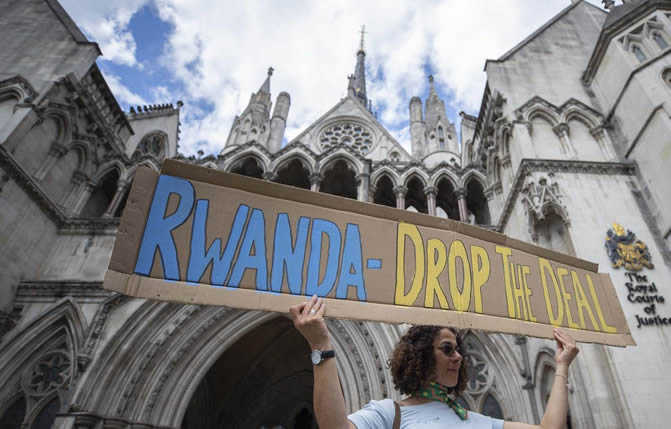
Dans un coup de théâtre diplomatique, le Rwanda a saisi la Cour permanente d'arbitrage de La Haye contre le Royaume-Uni. Kigali accuse Londres de ne pas avoir respecté l'accord controversé de relocalisation des migrants, notamment en ne versant pas les 100 millions de livres sterling promises. Parallèlement, en Éthiopie, la police fédérale a démantelé un vaste réseau criminel responsable du trafic et de la prise en otage de près de 1 800 personnes en route vers l'Europe via la Libye, pour un préjudice estimé à 13 millions de dollars.
Cette semaine en Afrique révèle ainsi un continent déterminé à reprendre en main son destin politique, mais toujours aux prises avec les démons de l'insécurité, des inégalités et des pressions migratoires.
Africa on the Move: Guinea's Reintegration, Migratory Tensions, and Economic Offensive – The Continent in the Headlines
This week's African news paints the complex picture of a continent in transformation, caught between political normalization, acute security challenges, and strategic economic reconfigurations. From Guinea's official reintegration into the West African bloc to xenophobic tensions in South Africa, and Rwanda's legal battle against the UK, Africa is confronting its challenges with renewed intensity.
ECOWAS: Guinea Under Mamadi Doumbouya Fully Reintegrated
The sanctions chapter appears to be closing for Conakry. The Economic Community of West African States (ECOWAS) has officially lifted, with immediate effect, all residual sanctions imposed on Guinea since the September 2021 coup. In a statement, the organization praised "the commitment and determination of the transition authorities" following the adoption of a new constitution and a presidential election in late 2023, won by Colonel Mamadi Doumbouya. This rehabilitation, following that of the African Union, consolidates the regional legitimacy of the installed president. As a sign of normalization, Doumbouya reappointed Amadou Oury Bah as Prime Minister and announced a streamlined government of 29 ministries.
South Sudan and Sudan: Persistent Insecurity and New Partnerships
While the African Union expresses "extreme concern" over the resurgence of violence in South Sudan's Jonglei State, government forces have retaken two key towns from rebels. The humanitarian situation remains dire. To the north, in Sudan, Khartoum is making a geostrategic shift by prioritizing Saudi companies to restore its infrastructure, particularly railways and ports. This decision, made after canceling a deal with the United Arab Emirates, illustrates the reshuffling of alliances in a region ravaged by a deadly conflict since April 2023.
South Africa: A Double Offensive on Identity and Industry
Johannesburg is the stage for two symbolic battles. On one hand, the government continues its policy of toponymic "decolonization" by approving the renaming of over 20 places, including East London, which will become KuGompo City. On the other hand, the regulator is considering a massive increase in import duties on vehicles (up to 50%) to protect the local industry, weakened by the massive arrival of Chinese brands. This economic tension is coupled with a social crisis: anti-immigration movements, like Operation Dudula, are violently protesting against the schooling of children of illegal migrants, leading to the arrest of one of their figures, Jacinta Ngobese-Zuma.
Business and Diplomacy: Rwanda Sues the UK, Ethiopia Busts a Trafficking Ring
In a diplomatic bombshell, Rwanda has taken the United Kingdom to the Permanent Court of Arbitration in The Hague. Kigali accuses London of failing to respect the controversial migrant relocation agreement, notably by not paying the promised £100 million. Meanwhile, in Ethiopia, federal police have dismantled a vast criminal network responsible for trafficking and holding nearly 1,800 people hostage on their way to Europe via Libya, causing an estimated $13 million in damages.
This week in Africa thus reveals a continent determined to take control of its political destiny, yet still grappling with the demons of insecurity, inequality, and migratory pressures.
Cédéao, Guinée, Mamadi Doumbouya, levée des sanctions, Soudan du Sud, Jonglei, Soudan, Arabie Saoudite, infrastructures, Afrique du Sud, changement de noms, East London, KuGompo City, droits de douane, voitures, importation, Chine, Rwanda, Royaume-Uni, accord migrants, Éthiopie, traite d'êtres humains, Libye, immigration illégale, Opération Dudula, Union Africaine, actualité Afrique, politique africaine, économie Afrique.
ECOWAS, Guinea, Mamadi Doumbouya, sanctions lifted, South Sudan, Jonglei, Sudan, Saudi Arabia, infrastructure, South Africa, name changes, East London, KuGompo City, import duties, cars, China, Rwanda, United Kingdom, migrant deal, Ethiopia, human trafficking, Libya, illegal immigration, Operation Dudula, African Union, Africa news, African politics, African economy.
Moussa Nassourou
Le calendrier complet de la Can Féminine 2026
Suivez certains matchs en direct grâce à nos partenaires
Articles similaires
 Opinion
« Nous ne sommes pas au même niveau » : Samuel Eto’o répond sèchement à ses détracteurs
Samuel Eto’o Fils répond à ses détracteurs dans une sortie explosive. Le président de la FECAFOOT...
 Opinion
Cameroun : 366 milliards de corruption constatée en dix ans, mais un gouffre budgétaire 45 fois plus grand
Au Cameroun, 365,9 milliards FCFA de préjudices liés à la corruption ont été recensés en dix ans....
 Opinion
Cameroun : les obligations en dollars s’effondrent… et Bloomberg devient un procès politique. Les vrais chiffres disent autre chose
Bloomberg pointe la pire performance des obligations camerounaises en dollars. En une semaine, le...
 Opinion
Cameroun : le gouvernement tire la sonnette d’alarme face à la banalisation de la prostitution et des dérives sur les réseaux sociaux
Le MINPROFF condamne la promotion de la prostitution et des comportements immoraux sur les réseaux...
 Opinion
Cameroun : pourquoi les milliards de la Banque mondiale peinent encore à se transformer en chantiers
Malgré un portefeuille historique de près de 2 700 milliards FCFA, les projets financés par la...
 Opinion
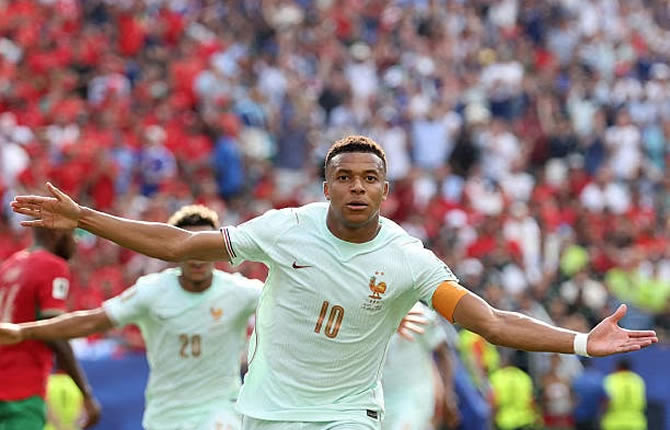
France-Maroc : soirée historique sans violences à Paris, drame dans le Nord, Mbappé entre dans la légende du Mondial
La victoire 2-0 de la France face au Maroc propulse les Bleus en demi-finale de la Coupe du monde....