
En 2018, le régime de Yaoundé, conduit par le RDPC, avait claqué la porte à toute coopération avec l’ONU ou l’Union Européenne pour l’observation des élections. Pire encore, le pouvoir avait mis en scène de pseudo-observateurs de Transparency International, transformant la démocratie en théâtre d’ombres, où fraudes massives, intimidations, répressions et falsifications étaient érigées en méthode de gouvernance.
Mais en 2025, retournement spectaculaire : le régime, sans tambour ni trompette, décide de s’allier à l’ONU, excluant au passage partis politiques et société civile du processus décisionnel. Un virage pour le moins suspect.
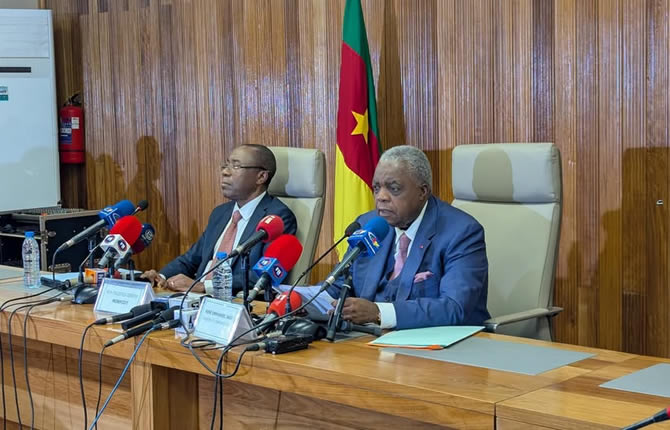
Dans un communiqué publié le 15 mai 2025, le président du Conseil Électoral d’ELECAM annonce la signature d’un accord d’assistance technique électorale ONU-ELECAM, vantant « l’expertise avérée » du système onusien. Une reconnaissance tardive – voire hypocrite – après 43 années d’un pouvoir sans partage exercé par Paul Biya, et cinq élections présidentielles organisées en autarcie totale.
Alors, pourquoi maintenant ? Pourquoi cette soudaine ouverture ? Pourquoi l'ONU serait-elle aujourd’hui digne de confiance, quand hier elle était diabolisée ? Cette volte-face soulève de nombreuses interrogations et fait planer de lourds doutes sur la transparence réelle du scrutin à venir.
Autre élément troublant : le rôle potentiel de Philémon Yang, ancien Premier ministre et actuel Président de l’Assemblée Générale de l’ONU. Des voix s’élèvent pour dénoncer l’éventuelle instrumentalisation de cette haute fonction internationale à des fins partisanes, voire des manœuvres désespérées d’un régime à bout de souffle.
Le MRC, l’APC, et l’ensemble du Peuple du Changement exigent la publication intégrale de cette Convention ONU-ELECAM, qui ne saurait rester secrète. Elle doit être aussi publique que la Constitution et le Code Électoral, exige Maurice Kamto, le leader de l'opposition.
Affaire à suivre de très près.
2025 Presidential Election: The UN Steps into Cameroon’s Electoral Process for the First Time
For the first time since its independence, Cameroon has invited the United Nations (UN) to participate in organizing its presidential election, scheduled for October 2025. This marks a historic and unprecedented moment in the country’s political history.
In 2018, the ruling party, RDPC, vehemently rejected international observation, refusing both the UN and the European Union, and instead resorted to fake election observers from Transparency International. The 2018 polls were marred by massive fraud, intimidation, repression of opposition candidates and supporters, and blatant manipulation of results — exposing the authoritarian face of the regime.
Yet, in 2025, in an unexpected move, the same regime has quietly signed a technical assistance agreement with the UN, while excluding political parties and civil society from the process. A suspicious turnaround that raises many red flags.
According to the Electoral Council's statement dated May 15, 2025, this agreement falls under the UN’s commitment to support its member states with electoral expertise. But why acknowledge the UN’s “proven expertise” now — after 43 years in power, five contested presidential elections, and just days before the electorate is summoned?
What is truly behind this late recognition of the UN’s role?
Suspicions grow even stronger with the presence of Philémon Yang, Cameroon’s former Prime Minister and current President of the UN General Assembly. Is his international status being used to legitimize a crumbling dictatorship back home?
The MRC, the APC, and the People of Change demand the full disclosure of the UN-ELECAM agreement, which must be made public like Cameroon’s Constitution and Electoral Code.
This is a pivotal moment for Cameroonian democracy. The eyes of the world are now on Yaoundé.
Élection présidentielle Cameroun 2025 ONU Cameroun élections Maurice Kamto 2025 ELECAM ONU convention Observateurs électoraux Cameroun Fraude électorale Cameroun Philémon Yang ONU RDPC et démocratie MRC élections 2025 Crise politique au Cameroun Changement politique au Cameroun Transparence électorale Cameroun
Ange NGO