
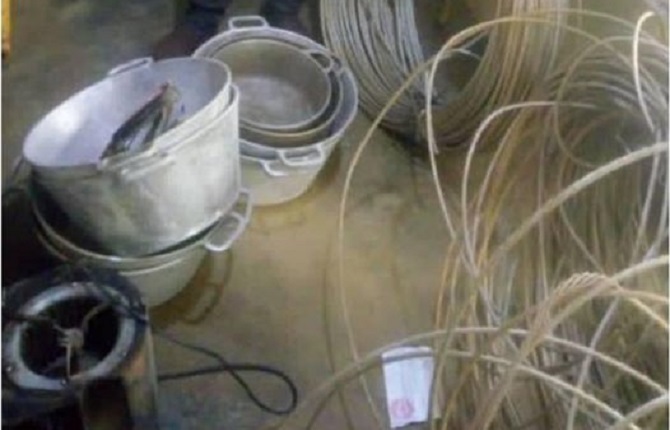
Câbles électriques : 33,8 milliards FCFA de la Chine vers le Cameroun, mais où va vraiment l'argent ?
Un prêt de 60 millions de dollars signé entre le géant chinois Huatong et l'IFC doit financer la production de câbles au Cameroun et en Tanzanie. Mais six mois après la signature, l'argent n'a toujours pas été décaissé. Et la plus grosse part du gâteau semble filer vers l'Afrique de l'Est.
C'est une signature qui avait tout d'une grande annonce. Le 29 mai 2026, le groupe chinois Hebei Huatong Wires and Cables Group et la Société financière internationale (IFC) paraphaient un accord de financement pouvant atteindre 60 millions de dollars, soit environ 33,8 milliards de FCFA. Objectif affiché : soutenir la fabrication de câbles électriques au Cameroun et en Tanzanie. Approuvé le 19 mars 2026 par les instances de l'IFC, le prêt associe Huatong, HT International Trading Services, Everwell Tanzania et Everwell Cameroon.
Mais près de cinq mois après la signature, la réalité est tout autre. Au 5 octobre 2026, la fiche du projet sur le site de l'IFC — mise à jour pour la dernière fois le 10 juillet — affichait toujours le statut « Pending Disbursement ». Traduction : le financement est signé, mais pas encore décaissé. Autrement dit, les 33,8 milliards de FCFA promis n'ont pas encore bougé.
Le Cameroun, grand perdant de la répartition ?
Premier constat qui fait grincer des dents : la totalité des 33,8 milliards de FCFA n'est pas destinée au Cameroun. Loin de là. L'IFC ne publie aucune ventilation officielle du prêt entre les deux pays. Mais dans son évaluation de 2026, l'institution précise que les dépenses d'investissement du projet sont principalement concentrées en Tanzanie. Comprenez : l'essentiel des fonds ira à l'augmentation des capacités de production de câbles en cuivre et en aluminium dans l'usine tanzanienne.
Pour Everwell Cameroon, la filiale locale basée à Douala, les fonds doivent financer les besoins en fonds de roulement de l'usine. Pas d'extension physique majeure annoncée au Cameroun. Le volet camerounais comporte néanmoins un objectif d'emploi : l'IFC indique que l'usine de Douala compte actuellement 85 salariés et pourrait créer jusqu'à 200 emplois directs supplémentaires. Une promesse qui reste suspendue au décaissement effectif des fonds.
Une incohérence arithmétique qui interpelle
Dans son évaluation environnementale, l'IFC avance un chiffre qui pose question. Le document annonce 310 salariés au total pour les opérations concernées. Mais il dénombre ensuite 300 salariés en Tanzanie et 85 au Cameroun, soit 385 emplois. Une incohérence arithmétique de 75 postes qui n'a pas échappé aux observateurs. Simple erreur de plume ou approximation révélatrice d'un dossier monté à la va-vite ? L'IFC n'a pas commenté.
Everwell Cameroon, une histoire camerounaise depuis 2016
Everwell Cameroon n'est pas un nouveau venu. La société a été créée le 15 septembre 2016. L'étude d'impact environnemental et social réalisée pour son usine de Douala indiquait alors un capital de 1,0001 milliard de FCFA, détenu à 97 % par Huatong, et prévoyait 130 emplois au démarrage. Le Cameroun était alors présenté comme la troisième implantation du groupe en Afrique subsaharienne, après la Tanzanie et la Zambie.
À son lancement, l'entreprise affichait des ambitions claires : conquérir 20 % à 25 % du marché des câbles importés, avant de substituer progressivement sa production aux importations et de développer les exportations. Le projet financé par l'IFC reprend aujourd'hui cet objectif d'augmenter la production locale de câbles et de réduire la dépendance aux importations. Mais dans les faits, l'extension physique financée est principalement située en Tanzanie.
L'aluminium ne vient plus d'Alucam
Autre changement majeur par rapport au projet initial : l'approvisionnement en aluminium. L'étude d'impact prévoyait qu'Everwell Cameroon s'approvisionne auprès d'Alucam, le géant camerounais de l'aluminium, avec un achat envisagé de 2 000 tonnes par an au démarrage. Le cuivre devait provenir du Congo, tandis que plusieurs intrants plastiques et les fils d'acier devaient être importés de Chine.
Dans son évaluation de 2026, l'IFC indique désormais que les lingots d'aluminium utilisés par les usines de Huatong au Cameroun et en Tanzanie sont importés d'Australie et du Japon. Les documents disponibles ne permettent pas d'établir si l'approvisionnement envisagé auprès d'Alucam a effectivement commencé avant d'être abandonné, ni à quelle date ce changement est intervenu. Un coup dur pour la filière aluminium locale, qui perd là un débouché potentiel.
Un plan environnemental et social classé catégorie B
Le prêt est assorti d'un plan d'action environnemental et social. Classé en catégorie B — projet à impacts environnementaux limités et gérables —, il doit notamment étendre aux opérations camerounaise et tanzanienne le système de gestion environnementale et sociale de Huatong, renforcer le suivi de la santé et de la sécurité au travail et rendre les mécanismes de plainte accessibles aux salariés et aux travailleurs des sous-traitants.
IHS Cameroon : 20 milliards FCFA de lignes de trésorerie inutilisées
Pendant que le dossier Huatong patine, un autre acteur télécoms camerounais fait parler de lui. IHS Cameroon disposait, au 30 juin 2026, de 20 milliards de FCFA de lignes de trésorerie auprès d'Ecobank Cameroun et d'Access Bank Cameroon, sans encours à cette date. Ces deux autorisations de découvert de 10 milliards de FCFA chacune sont destinées au financement des besoins en fonds de roulement de la filiale, selon les états financiers semestriels d'IHS Holding publiés le 11 août 2026.
La ligne Ecobank, conclue en septembre 2025, porte intérêt au taux annuel de 5,5 %, plus TVA. Son échéance était fixée à août 2026. Celle d'Access Bank, mise en place en octobre 2025, comprend une tranche de 7 milliards de FCFA rémunérée à 5,5 %, plus TVA, et une autre de 3 milliards à 6 %, plus TVA. Elle arrivait à échéance en septembre 2026.
Les comptes d'IHS montrent que ces deux facilités n'avaient également aucun encours au 31 décembre 2025 et au 31 mars 2026. La ligne Ecobank avait cependant été utilisée après sa mise en place. Dans ses états financiers du troisième trimestre 2025, IHS indiquait qu'IHS Cameroon avait tiré 669,6 millions de FCFA sur cette facilité au 7 novembre 2025, soit environ 1,2 million de dollars à l'époque.
Les échéances contractuelles des deux lignes sont depuis passées : août 2026 pour Ecobank et septembre 2026 pour Access Bank. Les comptes arrêtés au 30 juin n'indiquent pas si elles ont été renouvelées à leur échéance. Présent au Cameroun depuis fin 2012, IHS Cameroon exploite des infrastructures de télécommunications. L'entreprise a acquis en 2013 les tours de MTN Cameroon et conclu la même année un accord avec Orange Cameroun portant sur la gestion et la location de ses infrastructures.
Ce qu'il faut retenir
- 33,8 milliards FCFA : le montant du prêt IFC-Huatong signé le 29 mai 2026, toujours en « Pending Disbursement » au 5 octobre.
- Le Cameroun ne reçoit pas la majorité des fonds : les investissements sont principalement concentrés en Tanzanie.
- 200 emplois directs pourraient être créés à Douala, mais l'IFC avance des chiffres incohérents (310 vs 385 salariés).
- L'aluminium ne vient plus d'Alucam : il est désormais importé d'Australie et du Japon.
- IHS Cameroon dispose de 20 milliards FCFA de lignes de trésorerie inutilisées, dont les échéances sont passées.
Electric Cables: 33.8 Billion FCFA from China to Cameroon — But Where Is the Money Really Going?
A $60 million loan signed between Chinese giant Huatong and the IFC is meant to finance cable production in Cameroon and Tanzania. But six months after signing, the money still hasn't been disbursed. And the biggest slice of the pie appears to be heading to East Africa.
It was a signing that had all the makings of a major announcement. On May 29, 2026, Chinese group Hebei Huatong Wires and Cables Group and the International Finance Corporation (IFC) inked a financing agreement worth up to $60 million, or approximately 33.8 billion FCFA. The stated goal: supporting electrical cable manufacturing in Cameroon and Tanzania. Approved on March 19, 2026, by IFC bodies, the loan brings together Huatong, HT International Trading Services, Everwell Tanzania, and Everwell Cameroon.
But nearly five months after signing, the reality is quite different. As of October 5, 2026, the project page on the IFC website — last updated on July 10 — still displayed the status "Pending Disbursement." In other words, the financing is signed but not yet disbursed. The promised 33.8 billion FCFA has not yet moved.
Cameroon: The Big Loser in the Allocation?
The first striking observation: not all of the 33.8 billion FCFA is destined for Cameroon. Far from it. The IFC publishes no official breakdown of the loan between the two countries. But in its 2026 assessment, the institution states that the project's investment expenditures are primarily concentrated in Tanzania. Meaning: the bulk of the funds will go toward increasing copper and aluminum cable production capacity at the Tanzanian plant.
For Everwell Cameroon, the local subsidiary based in Douala, the funds are meant to finance the plant's working capital needs. No major physical expansion announced in Cameroon. The Cameroonian component nonetheless includes an employment objective: the IFC states that the Douala plant currently employs 85 workers and could create up to 200 additional direct jobs. A promise that remains contingent on the effective disbursement of funds.
A Striking Arithmetic Inconsistency
In its environmental assessment, the IFC puts forward a figure that raises questions. The document announces 310 total employees for the operations concerned. But it then counts 300 employees in Tanzania and 85 in Cameroon — totaling 385 jobs. An arithmetic inconsistency of 75 positions that has not gone unnoticed by observers. A simple clerical error or an approximation revealing a hastily assembled file? The IFC has not commented.
Everwell Cameroon: A Cameroonian Story Since 2016
Everwell Cameroon is no newcomer. The company was created on September 15, 2016. The environmental and social impact study conducted for its Douala plant indicated capital of 1.0001 billion FCFA, 97% owned by Huatong, and projected 130 jobs at startup. Cameroon was then presented as the group's third location in sub-Saharan Africa, after Tanzania and Zambia.
At its launch, the company had clear ambitions: capture 20% to 25% of the imported cable market, before gradually substituting its production for imports and developing exports. The IFC-financed project now reiterates the goal of increasing local cable production and reducing dependence on imports. But in practice, the physical expansion being financed is primarily located in Tanzania.
Aluminum No Longer Comes from Alucam
Another major change from the initial project: aluminum supply. The impact study planned for Everwell Cameroon to source aluminum from Alucam, the Cameroonian aluminum giant, with a planned purchase of 2,000 tons per year at startup. Copper was to come from Congo, while several plastic inputs and steel wires were to be imported from China.
In its 2026 assessment, the IFC now states that aluminum ingots used by Huatong's plants in Cameroon and Tanzania are imported from Australia and Japan. Available documents do not establish whether the planned Alucam supply actually began before being abandoned, nor when this change occurred. A blow to the local aluminum sector, which loses a potential outlet.
An Environmental and Social Action Plan Classified Category B
The loan comes with an environmental and social action plan. Classified as Category B — projects with limited and manageable environmental impacts — it must notably extend Huatong's environmental and social management system to Cameroonian and Tanzanian operations, strengthen occupational health and safety monitoring, and make grievance mechanisms accessible to employees and subcontractor workers.
IHS Cameroon: 20 Billion FCFA in Unused Treasury Lines
While the Huatong file stalls, another Cameroonian telecom player is making headlines. IHS Cameroon had, as of June 30, 2026, 20 billion FCFA in treasury lines with Ecobank Cameroon and Access Bank Cameroon, with no outstanding balance at that date. These two overdraft authorizations of 10 billion FCFA each are intended to finance the subsidiary's working capital needs, according to IHS Holding's semi-annual financial statements published on August 11, 2026.
The Ecobank line, concluded in September 2025, carries an annual interest rate of 5.5%, plus VAT. Its maturity was set for August 2026. The Access Bank line, established in October 2025, comprises a 7 billion FCFA tranche remunerated at 5.5%, plus VAT, and another 3 billion at 6%, plus VAT. It was due in September 2026.
IHS accounts show that both facilities also had no outstanding balance as of December 31, 2025, and March 31, 2026. The Ecobank line had, however, been used after its establishment. In its third-quarter 2025 financial statements, IHS indicated that IHS Cameroon had drawn 669.6 million FCFA on this facility as of November 7, 2025, or approximately $1.2 million at the time.
The contractual maturities of both lines have since passed: August 2026 for Ecobank and September 2026 for Access Bank. The accounts as of June 30 do not indicate whether they were renewed at maturity. Present in Cameroon since late 2012, IHS Cameroon operates telecommunications infrastructure. The company acquired MTN Cameroon's towers in 2013 and signed an agreement with Orange Cameroun the same year for the management and leasing of its infrastructure.
Key Takeaways
- 33.8 billion FCFA: the amount of the IFC-Huatong loan signed on May 29, 2026, still in "Pending Disbursement" as of October 5.
- Cameroon is not receiving the majority of funds: investments are primarily concentrated in Tanzania.
- 200 direct jobs could be created in Douala, but the IFC cites inconsistent figures (310 vs 385 employees).
- Aluminum no longer comes from Alucam: it is now imported from Australia and Japan.
- IHS Cameroon has 20 billion FCFA in unused treasury lines, whose maturities have passed.
Didier Cebas K.
Le calendrier complet de la Can Féminine 2026
Suivez certains matchs en direct grâce à nos partenaires
Articles similaires
 Société
Cameroun : 3,8 points sur 5,9 %… Yaoundé tire encore la Cemac vers le haut au 2e trimestre 2026
Au 2e trimestre 2026, le Cameroun reste le moteur de la Cemac avec +3,8 points sur une hausse de...
 Société
Boom du savon made in Cameroon : deux nouvelles usines à Douala et des exportations qui explosent de 31 %
Deux savonneries annoncées à Douala en octobre 2025. Le savon camerounais grimpe au top 10 des...
 Société
Pétrole camerounais : l'actionnaire d'Etinde alerte, ses liquidités pourraient s'épuiser avant fin 2026
Bowleven, détenteur de 25 % d'Etinde, prévient que ses liquidités pourraient s'épuiser avant fin...
 Société
CDC : 24,8 milliards FCFA de salaires pour 24,9 milliards de chiffre d’affaires, la crise financière s’aggrave
La CDC a réalisé 24,93 milliards FCFA de chiffre d’affaires en 2025, mais accuse 20,04 milliards de...
 Société
Pétrole et gaz au Sénégal : le Conseil constitutionnel inflige un revers spectaculaire aux députés
Au Sénégal, le Conseil constitutionnel rejette la proposition des députés sur les contrats...
 Société
Plus de 10 000 femmes ciblées sur le dark web, Asos frappé par une cyberattaque : la nouvelle alerte sur les données personnelles
Plus de 850 000 photos intimes liées à des données personnelles circuleraient sur le dark web. Dans...