

Le chrono tourne, la sueur perle et les nerfs sont à vif. À moins d’un an de la Coupe d’Afrique des Nations 2027, l’ambiance n’est pas à la fête en Ouganda. Alors que le co-hôte doit partager l’affiche avec le Kenya et la Tanzanie, les regards se tournent vers Kampala. Et ce qui s’y passe est loin de rassurer les amoureux du ballon rond.
Le gouvernement ougandais, par la voix de sa Première ministre, a tiré la sonnette d’alarme. La rénovation du stade national de Namboole, véritable vaisseau amiral du football ougandais, patine dangereusement. « Il faut des résultats, et vite ! » a-t-elle martelé, face à des délais qui semblent fondre comme neige au soleil. L’inquiétude est palpable dans les hautes sphères : l’Ouganda sera-t-il en mesure de relever ce défi logistique et infrastructurel ?
L’ombre de la CAF et le spectre de l’échec
La pression est sur le point d’atteindre son paroxysme. Le 31 août 2026, une mission d’inspection de la Confédération africaine de football (CAF) est attendue sur place. Un véritable test de vérité qui scellera le sort du pays. Si les inspecteurs de la CAF constatent un retard trop important, c’est la honte et l’exclusion qui planeront au-dessus de l’Ouganda. Une situation que le Cameroun, habitué à ce type d’échéances, suit avec attention, conscient des exigences colossales de l’organisation d’une CAN.
La Première ministre a exigé des résultats rapides, mais les entreprises de construction locales semblent dépassées par l’ampleur du chantier. Les prochaines semaines seront décisives. L'Ouganda doit prouver qu'il peut transformer l'essai et se montrer à la hauteur de l'honneur qui lui a été fait. La crédibilité du football est-africain est en jeu.
Le Maroc, un modèle qui inspire et qui écrase
Pendant que Kampala sue sang et eau sur ses chantiers, un autre pays, lui, trace sa route au sommet avec la sérénité des géants. Sabri Lamouchi, l’entraîneur français qui connaît bien le football africain pour avoir dirigé la Tunisie, a livré une analyse sans appel : le Maroc est devenu une puissance incontestée du football continental.
« Il y a vingt ans, la Tunisie dominait, le Maroc était un outsider. Aujourd’hui, le rapport de force a complètement basculé, » explique Lamouchi. Pour lui, l’ascension des Lions de l’Atlas n’est pas le fruit du hasard, mais d’une stratégie implacable. Le Maroc a su bâtir un projet intégré, mêlant investissements massifs dans des infrastructures de pointe, création d’académies ultra-performantes et valorisation de sa diaspora.
Cette politique de formation, couplée à un maillage efficace avec les binationaux, a propulsé le Maroc sur le devant de la scène. Aujourd’hui, ce pays d’Afrique du Nord est devenu une référence pour toutes les nations du continent, y compris le Cameroun, qui peine parfois à structurer sa filière de jeunes talents. Alors que l’Ouganda cherche encore à construire des stades, le Maroc a déjà achevé la construction de son empire footballistique.
Le Cameroun, entre admiration et pragmatisme
Pour nous Camerounais, cette double actualité est riche d’enseignements. D’un côté, on compatit avec les difficultés de l’Ouganda, rappelant les déboires que nous avons pu connaître. Mais de l’autre, on admire le modèle marocain, un phare dans la nuit qui éclaire la voie à suivre.
L’Afrique du football change de visage. L’ère du « on va se débrouiller » semble révolue. Place à la planification, à l’exigence et à la performance durable. L’Ouganda a une chance immense de montrer sa capacité à se réinventer. Pour cela, il n’a pas le droit à l’erreur. Le compte à rebours est lancé.
CAN 2027: Uganda in Turmoil as Morocco Teaches Africa a Masterclass!
The clock is ticking, the pressure is mounting. With less than a year to go before the 2027 Africa Cup of Nations, the mood in Uganda is far from festive. As a co-host alongside Kenya and Tanzania, all eyes are on Kampala. And the situation on the ground is far from reassuring for football fans.
The Ugandan government, through its Prime Minister, has sounded the alarm. The renovation of the national stadium, Namboole, the very heart of Ugandan football, is progressing at a dangerously slow pace. "We need results, and fast!" she insisted, as deadlines seem to be melting away. The concern at the highest level is palpable: Will Uganda be able to meet this logistical and infrastructural challenge?
The Shadow of CAF and the Specter of Failure
The pressure is about to peak. On August 31, 2026, an inspection mission from the Confederation of African Football (CAF) is expected on site. This will be a true test of truth that will seal the country's fate. If the CAF inspectors notice too much of a delay, Uganda faces the shame of potential exclusion. A situation that Cameroon, familiar with such deadlines, watches closely, fully aware of the enormous demands of hosting a CAN.
The Prime Minister has demanded quick results, but local construction companies seem overwhelmed by the scale of the project. The coming weeks will be decisive. Uganda must prove it can rise to the occasion and prove itself worthy of the honor bestowed upon it. The credibility of East African football is at stake.
Morocco, a Model That Inspires and Dominates
While Kampala sweats over its construction sites, another country is cruising to the top with the serenity of a giant. Sabri Lamouchi, the French coach who knows African football well, having coached Tunisia, delivered a blunt analysis: Morocco has become an undisputed powerhouse of African football.
"Twenty years ago, Tunisia dominated, Morocco was an outsider. Today, the balance of power has completely shifted," Lamouchi said. For him, the rise of the Atlas Lions is no accident but the result of an ironclad strategy. Morocco has built an integrated project, combining massive investments in state-of-the-art infrastructure, world-class academies, and the empowerment of its diaspora.
This policy of local training, coupled with an effective network of professional players abroad, has propelled Morocco to the forefront. Today, this North African country has become a benchmark for all nations on the continent, including Cameroon, which sometimes struggles to structure its youth development pipeline. While Uganda is still looking to build stadiums, Morocco has already finished building its football empire.
Cameroon: Between Admiration and Pragmatism
For us Cameroonians, this dual news is full of lessons. On one hand, we sympathize with Uganda's difficulties, recalling the setbacks we have known. On the other, we admire the Moroccan model, a lighthouse in the night showing the way forward.
African football is changing. The era of "we'll figure it out" seems to be over. The new order is planning, rigor, and sustainable performance. Uganda has a huge chance to show its ability to reinvent itself. To do so, it cannot afford to fail. The countdown has begun.
CAN 2027, Ouganda, Stade Namboole, CAF, inspection CAF, Kenya, Tanzanie, co-hôte CAN, retard travaux, football africain, Sabri Lamouchi, Maroc, puissance football, Tunisie, Lions de l'Atlas, académie de football, infrastructure sportive, football camerounais, préparation CAN, échec organisation, modèle marocain, Afrique football, actus CAN, football, sport.
Lucien Abembe
Le calendrier complet de la Can Féminine 2026
Suivez certains matchs en direct grâce à nos partenaires
Articles similaires
 Sport
Sport
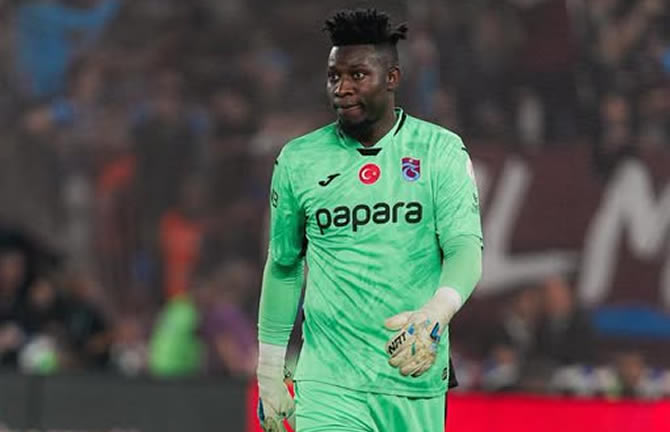
André Onana XXL : le Lion verrouille sa cage et Trabzonspor corrige le leader Galatasaray (4-0)
André Onana signe un nouveau clean sheet et Trabzonspor humilie Galatasaray (4-0) avec un triplé de...
 Sport
Sport
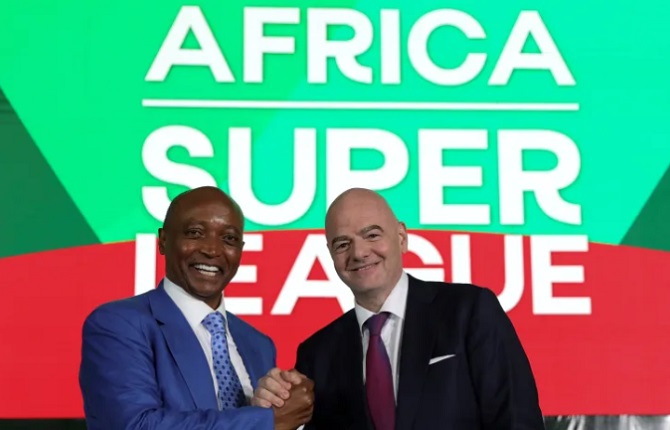
CAP-VERT 2026. Motsepe convoque les 54 nations africaines : Infantino annoncé, l'avenir du football africain se décide à Santa Maria
La CAF réunit les 54 associations membres du 7 au 9 octobre 2026 à Santa Maria, au Cap-Vert. Bilan...
 Sport
Sport
EXCLUSIF. UEFA et CONCACAF déclarent la guerre à Infantino : 2 milliards de dollars réclamés pour les 211 fédérations
Coup de tonnerre à la FIFA ! L'UEFA et la CONCACAF exigent une enquête indépendante sur les...
 Sport
Sport
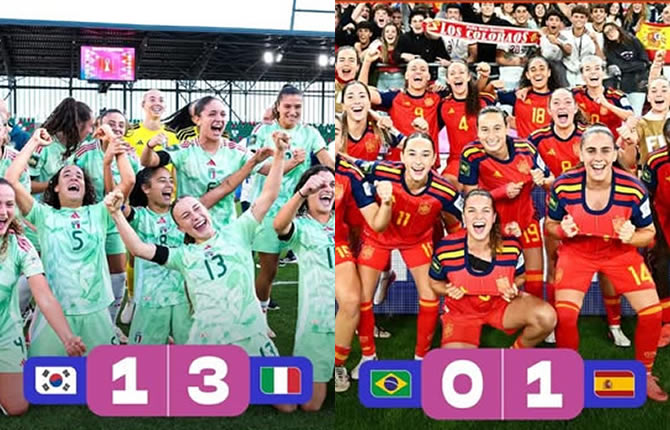
Mondial U20 féminin : l’Espagne et l’Italie en demi-finales, le Brésil éliminé
Mondial U20 féminin 2026 : l’Italie bat la Corée du Sud 3-1 et l’Espagne élimine le Brésil 1-0....
 Sport
Sport
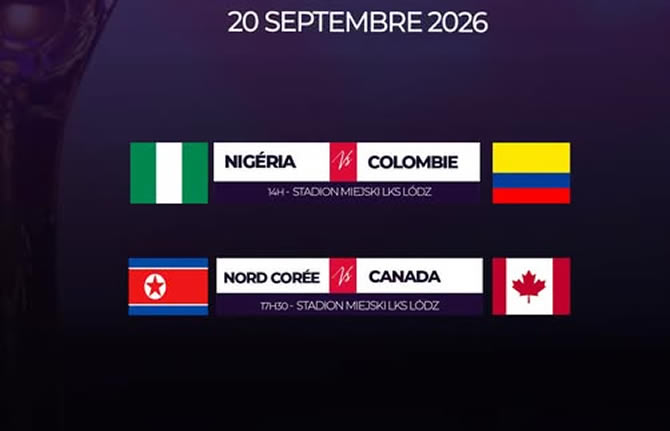
Nigéria – Colombie : les Falconets jouent une place en demi-finale du Mondial U20 ce dimanche
Nigéria – Colombie en quart de finale du Mondial U20 Féminin ce dimanche 20 septembre. Coup d’envoi...
 Sport
Sport
CAN 2027 : Mané écarté, Kudus et Djiku de retour, la Tunisie rebat les cartes… tout ce qu'il faut savoir sur les listes
Sénégal sans Mané, Ghana avec Kudus, Tunisie renouvelée, RDC touchée par les blessures : découvrez...