Selon les informations rapportées par Africanews et confirmées par des sources onusiennes, les spécialistes de la paix arriveront à Uvira « dans les jours à venir ». Ce déploiement constitue la première mise en œuvre opérationnelle de l'accord de Doha, qui prévoit la création d'un mécanisme de surveillance. Un premier test, crucial, pour une trêve dont la région, meurtrie par des décennies de conflits, attend beaucoup.
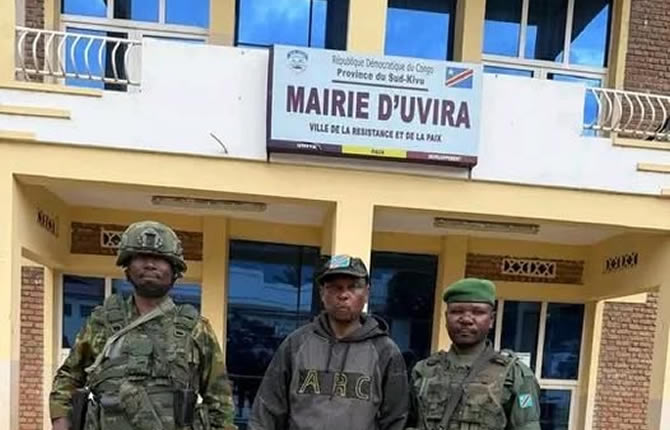
Le choix d'Uvira n'est pas anodin. La ville occupe une position géostratégique sensible, en bordure du lac Tanganyika et à la frontière avec le Burundi. Depuis que les rebelles du M23 se sont emparés de Bukavu, le chef-lieu provincial, en février 2025, Uvira avait été désignée comme le nouveau centre administratif du Sud-Kivu par les autorités congolaises. Son histoire récente est un microcosme des soubresauts de l'Est : âprement disputée, la ville était tombée aux mains du M23 le 10 décembre 2025, avant d'être évacuée par les rebelles six jours plus tard sous de « fortes pressions » internationales, notamment américaines.
La reprise des hostilités fin 2021 par le M23, un groupe créé en 2012 par d'anciens déserteurs de l'armée congolaise, a plongé le Nord et le Sud-Kivu dans une nouvelle spirale de violence. Aujourd'hui, plus d'une centaine de localités de cette région riche en minerais seraient sous son contrôle. Kinshasa ne cesse d'accuser, preuves à l'appui selon elle, le Rwanda voisin de soutenir militairement et financièrement la rébellion, une allégation fermement rejetée par Kigali.
Le déploiement imminent des casques bleus à Uvira représente donc une lueur d'espoir, mais aussi un défi immense. La communauté internationale retient son souffle, observant si cette mission de surveillance pourra être le prélude à une désescalade durable dans une région où les accords de paix ont trop souvent échoué. La stabilisation d'Uvira sera le premier indicateur de la volonté réelle des parties de tourner la page de la guerre.
DRC: Monusco to Deploy Peacekeepers in Uvira to Monitor Ceasefire with M23
Uvira. In a move that gives tangible form to fragile diplomatic progress, the United Nations Organization Stabilization Mission in the Democratic Republic of the Congo (MONUSCO) is preparing to deploy a contingent of peacekeepers to the strategic town of Uvira. The stated objective: to monitor compliance with the permanent ceasefire regime sealed on Monday under Qatari mediation between Kinshasa and the M23 (March 23 Movement) rebellion.
According to information reported by Africanews and confirmed by UN sources, the peacekeeping specialists will arrive in Uvira "in the coming days." This deployment constitutes the first operational implementation of the Doha agreement, which provides for the creation of a monitoring mechanism. It is a first, crucial test for a truce that the region, scarred by decades of conflict, is counting on.
The choice of Uvira is significant. The town occupies a sensitive geostrategic position, on the shores of Lake Tanganyika and bordering Burundi. Since M23 rebels seized Bukavu, the provincial capital, in February 2025, Uvira had been designated as the new administrative center for South Kivu by the Congolese authorities. Its recent history is a microcosm of the turmoil in the East: fiercely contested, the town fell to the M23 on December 10, 2025, before being evacuated by the rebels six days later under "heavy pressure" from the international community, notably the United States.
The resumption of hostilities by the M23 in late 2021—a group founded in 2012 by former deserters from the Congolese army—has plunged North and South Kivu into a new spiral of violence. Today, more than a hundred localities in this mineral-rich region are said to be under its control. Kinshasa continues to accuse neighboring Rwanda of providing military and financial support to the rebellion, an allegation firmly denied by Kigali.
The imminent deployment of blue helmets to Uvira therefore represents a glimmer of hope, but also an immense challenge. The international community is holding its breath, watching to see if this monitoring mission can be the prelude to a lasting de-escalation in a region where peace agreements have too often failed. The stabilization of Uvira will be the first indicator of the parties' genuine willingness to turn the page on war.
RDC, République Démocratique du Congo, Monusco, ONU, casques bleus, Uvira, Sud-Kivu, M23, Mouvement du 23 Mars, cessez-le-feu, accord de Doha, médiation Qatar, conflit Est RDC, paix, stabilisation, surveillance, Bukavu, Rwanda, rebelles, Afrique centrale, actualité Afrique
Didier Cebas K.