

Alors que le Sénégal de Bassirou Diomaye Faye poursuit sa mue institutionnelle avec un remaniement ministériel ciblé, le Tchad fait face à une tempête politique. Albert Pahimi Padacké, figure majeure de l'opposition tchadienne, lance une alerte rouge : les autorités prépareraient, selon lui, une révision en force de la Loi fondamentale pour satisfaire les ambitions du pouvoir en place.
Tchad : la Constitution dans le collimateur du pouvoir ?
La vie politique tchadienne est secouée par de graves accusations. Le chef de l’opposition et leader du Rassemblement national pour la démocratie (RNDT-Le Réveil), Albert Pahimi Padacké, a publiquement dénoncé ce qu'il considère comme une manœuvre des autorités. Selon des informations relayées par le site Alwihda, N'Djamena envisagerait une révision de la Constitution sous couvert d'une "initiative parlementaire", un processus que Padacké juge illégitime.
L'ancien Premier ministre affirme que pour obtenir une majorité au parlement, des pressions ont été exercées sur certains dirigeants de partis. Le but de cette révision ? Selon ses dires, il serait double et particulièrement sensible : rétablir la peine de mort et, surtout, supprimer le principe qui interdit au président de la République d'appartenir à un parti politique.
Un pilier hérité de la conférence nationale souveraine de 1993 et des Constitutions de 1996 et de 2023 serait donc sur la sellette. Pour Albert Pahimi Padacké, l'élection du président Mahamat Idriss Déby Itno à la tête du parti Mouvement patriotique du salut (MPS) en janvier 2025 est déjà une violation flagrante de ce principe. Les amendements en préparation ne seraient qu'une tentative de légaliser a posteriori un fait accompli. Face à ce qu'il perçoit comme un détournement des institutions, il exige la tenue d'un référendum pour que le peuple tchadien ait le dernier mot.
Sénégal : Faye affine son équipe gouvernementale
Dans un climat radicalement différent, le Sénégal opère une transition politique apaisée. Comme annoncé par RFI, le président Bassirou Diomaye Faye a procédé à un remaniement ministériel technique, confirmant la confiance placée en son Premier ministre, Ousmane Sonko.
Ce remaniement voit l'arrivée de deux nouveaux portefeuilles clés : les Affaires étrangères et l'Intérieur. Le diplomate de carrière Cheikh Niang, ancien ambassadeur du Sénégal aux Nations unies, prend la tête de la diplomatie sénégalaise, remplaçant Yassine Fall. Cette dernière hérite du ministère de la Justice.
À l'Intérieur et à la Sécurité publique, c'est Mouhamadou Bamba Cissé, l'ancien avocat d'Ousmane Sonko, qui est nommé. Une décision qui symbolise la forte cohésion au sommet de l'État et la volonté de placer des profils de confiance aux postes sensibles.
Ces deux événements simultanés en Afrique centrale et de l'Ouest dessinent en creux deux trajectoires politiques opposées. D'un côté, le Tchad, où l'opposition craint un verrouillage du pouvoir et une remise en cause des acquis démocratiques. De l'autre, le Sénégal, où le nouveau pouvoir semble consolider ses bases et privilégier une gouvernance stable, tournée vers l'efficacité administrative et la continuité diplomatique. La suite des événements dira laquelle de ces visions l'emportera.
Chad-Senegal: Contrasting Visions of the Rule of Law Amid Political Upheaval
In N'Djamena, the opposition denounces a controversial draft constitutional revision. In Dakar, President Faye fine-tunes his government in a calming climate.
While Senegal under Bassirou Diomaye Faye continues its institutional transformation with a targeted cabinet reshuffle, Chad is facing a political storm. Albert Pahimi Padacké, a major opposition figure in Chad, has raised a red flag: he claims the authorities are preparing to forcefully revise the Constitution to serve the ambitions of the ruling power.
Chad: Is the Constitution in the Crosshairs of the Power?
The political life in Chad is shaken by serious accusations. The opposition leader and head of the Rassemblement national pour la démocratie (RNDT-Le Réveil), Albert Pahimi Padacké, has publicly denounced what he sees as a maneuver by the authorities. According to reports from the Alwihda website, N'Djamena is considering a constitutional revision under the guise of a "parliamentary initiative," a process Padacké deems illegitimate.
The former Prime Minister claims that pressure was exerted on certain party leaders to secure a parliamentary majority. The aim of this revision? According to him, it is twofold and particularly sensitive: to reinstate the death penalty and, crucially, to remove the principle that prohibits the President of the Republic from belonging to a political party.
A cornerstone inherited from the 1993 Sovereign National Conference and the 1996 and 2023 Constitutions is therefore under threat. For Albert Pahimi Padacké, the election of President Mahamat Idriss Déby Itno as head of the Patriotic Salvation Movement (MPS) in January 2025 is already a blatant violation of this principle. The amendments in preparation would only be an attempt to retroactively legalize a fait accompli. Faced with what he perceives as a hijacking of institutions, he demands a referendum to let the Chadian people have the final say.
Senegal: Faye Fine-Tunes His Government Team
In a radically different climate, Senegal is undergoing a peaceful political transition. As reported by RFI, President Bassirou Diomaye Faye has carried out a technical ministerial reshuffle, confirming his trust in his Prime Minister, Ousmane Sonko.
This reshuffle sees the arrival of two new key portfolios: Foreign Affairs and the Interior. Career diplomat Cheikh Niang, former Senegalese ambassador to the United Nations, takes the helm of Senegalese diplomacy, replacing Yassine Fall. The latter takes over the Ministry of Justice.
At the Interior and Public Security ministry, Mouhamadou Bamba Cissé, Ousmane Sonko's former lawyer, is appointed. A decision that symbolizes the strong cohesion at the top of the state and the desire to place trusted profiles in sensitive positions.
These two simultaneous events in Central and West Africa outline two opposing political trajectories. On one side, Chad, where the opposition fears a tightening of power and a challenge to democratic gains. On the other, Senegal, where the new power seems to be consolidating its base and favoring stable governance, focused on administrative efficiency and diplomatic continuity. The coming events will tell which of these visions will prevail.
Tchad, Sénégal, révision constitutionnelle, Albert Pahimi Padacké, Bassirou Diomaye Faye, Ousmane Sonko, politique africaine, actualité Cameroun, Afrique, Mahamat Idriss Déby, peine de mort, remaniement ministériel, Mouvement patriotique du salut (MPS), Rassemblement national pour la démocratie, Cheikh Niang, Mouhamadou Bamba Cissé, Alwihda, RFI, crise politique, état de droit
Moussa Nassourou
Le calendrier complet de la Can Féminine 2026
Suivez certains matchs en direct grâce à nos partenaires
Articles similaires
 Société
Menace sur l’Europe : après les avions, ils visent métros, trains et croisières, la télévision irlandaise évacuée
Un courriel intitulé « Message à l’Occident » menace l’Europe d’une nouvelle vague d’attaques....
 Société
Nigeria : l’armée dément toute trêve avec Boko Haram et annonce une offensive renforcée
L’armée nigériane dément tout accord de trêve de trois mois avec Boko Haram, malgré les...
 Société
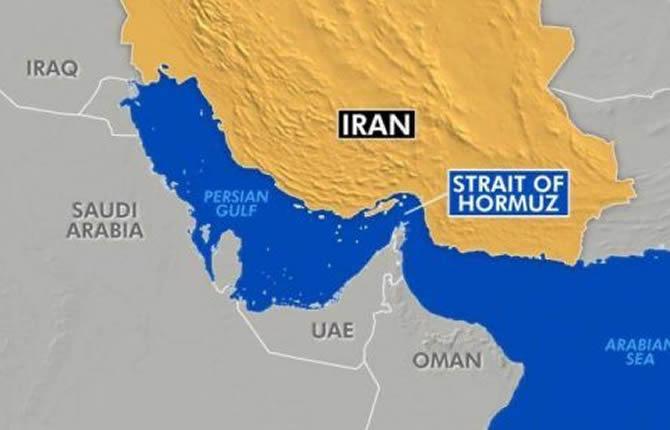
Iran abat un drone américain MQ-9 au-dessus de Qeshm : explosions, négociations floues et menaces de frappe US le 9 novembre
L’Iran revendique la destruction d’un drone US MQ-9 au-dessus de Qeshm. Trump parle encore avec...
 Société
L’héritier Rockefeller s’éteint à 89 ans : le dernier géant d’une dynastie pétrolière qui a marqué l’Amérique
John D. Rockefeller IV, arrière-petit-fils du fondateur de Standard Oil et ancien sénateur...
 Société
Cameroun : 140,6 milliards de FCFA engloutis dans les entreprises, contre 15 milliards prévus au budget
Le Cameroun a ordonnancé 140,6 milliards de FCFA pour les entreprises en 2025, contre 15 milliards...
 Société
Nuit noire sur l’Iran ? Washington étudie une reprise des frappes le 9 novembre sous la nouvelle lune
Fox News révèle : les États-Unis envisagent de relancer les hostilités contre l’Iran dès le 9...