
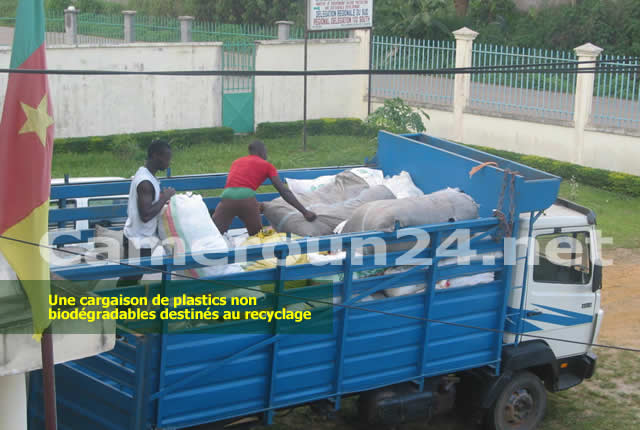
Since the ban on the production, distribution and use of light-weight plastics of less than 60 microns by the Ministries of Environment, Nature Protection and Sustainable Development and that of Trade in April 2014, little or nothing has changed. Despite the adverse effects of the use of banned plastics, some companies still produce huge quantities, while wholesalers import with impunity from neighbouring countries.
Due to the adverse effects on man, biodiversity and the environment, the Ministry of Environment, Nature Protection and Sustainable Development, has vowed to stop these plastics from being distributed. In the Littoral Region, the Delegation of Environment, backed by a team from Yaounde, law enforcement officers and members of the Littoral Control Mission Against Illegal Plastics, have been combing markets and plastic production companies. The raids have resulted in the seizure of about 10 metric tonnes of banned plastics in two days.
The crackdown, which began on January 3, 2016, will run till January 10. According to the Sub-Director in charge of Management of Waste, Toxic and Hazardous Chemicals in the Ministry of Environment, Lemnyuy Albun William Banye, many cattle and sea animals have died after consuming the plastics. The plastics, which are difficult to collect and recycle, also cause soil infertility, thereby destroying biodiversity.
On the field, traders and shopkeepers insist that heavy-weight plastics of more than 60 microns were not available, reason why they go for the light ones. The complaint, according to Lemnyuy William, is unfounded since traders prefer cheap plastics in order to make more profit. The Littoral Regional Delegation for the Environment has also been working with Customs to stem imports of banned plastics and also track down culprits. About 25 metric tonnes were impounded in 2015 and about 10 tonnes this year after two days of raids.
The authorities say Environment Posts will be created in seaports and border posts to check the entry of such plastics into the country. Meanwhile, the seized plastics will be destroyed and later handed to companies with environmental permits for recycling.
Le calendrier complet de la Can Féminine 2026
Suivez certains matchs en direct grâce à nos partenaires
Articles similaires
 Société
Mines au Cameroun : 1,14 milliard FCFA promis, zéro franc encaissé… et deux groupes étrangers sous haute tension financière
Aeternum (Nkamouna) annonce 1,14 milliard FCFA d’engagements sans aucun versement, tandis que BWA...
 Société
CAMTEL réclame 311 milliards FCFA à cause de la fibre optique : les dessous du bras de fer avec l'ART
CAMTEL réclame 311 milliards FCFA de manque à gagner sur sa fibre optique et conteste l'ART, qui...
 Société
925 milliards de FCFA des OPCVM de la CEMAC dans la dette publique BEAC : le Cameroun passe de 20,8 % à 3,4 %… et les chiffres Cosumaf ne collent plus
Au 30 juin 2026, les OPCVM de la CEMAC détenaient 925,3 milliards de FCFA de titres publics BEAC,...
 Société
Kaélé : 2,5 milliards pour le lycée technique… et la clôture + jardin coûtent plus cher que les ateliers et salles de classe
Le PSRDREN injecte 2,51 milliards FCFA dans le lycée technique de Kaélé. Surprise : 1,08 milliard...
 Société
Youpwè : 2 138 tonnes de poisson en six mois, mais le Cameroun en importe encore 267 601
Youpwè a reçu 2 138 tonnes de poisson au 1er semestre 2026 (+8 %). Vendeurs non transférés, bateaux...
 Société
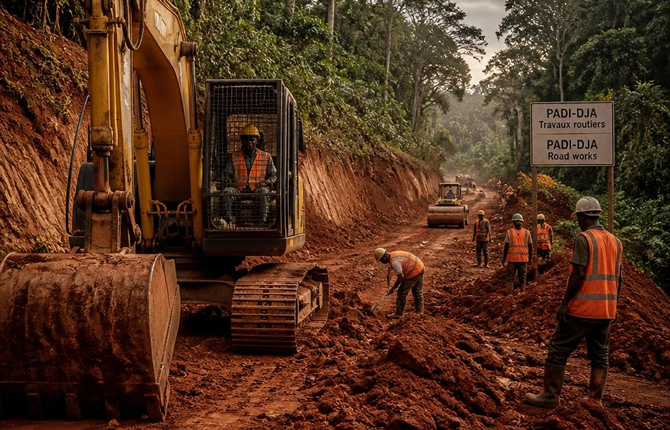
61 milliards FCFA pour les routes de l'Est et du Sud : les Chinois raflent la mise, les Camerounais grondent
Deux filiales de CCCC décrochent 61 milliards FCFA de marchés routiers dans l'Est et le Sud...